
What is Addiction?
Addiction is a non-medical term that refers to a wide range of mental disorders called substance use disorders (SUD). Substance use disorders are patterns of drug or alcohol use that persist even after they cause problems or negative consequences in a person’s life. People with substance use disorders often (but not always) are physically or psychologically addicted to the substance, which makes it much harder for them to stop using. Certain biological, genetic, and social factors make some people more vulnerable to developing addictions.
Substance Use Disorders versus Addiction: Substance use disorders (SUD) are the clinical terms used to diagnose problem substance use or abuse. While there is a lot of overlap between the two, there are important differences between an ‘addiction’ and a ‘substance use disorder’.
An addiction is an unhealthy physical or psychological dependence on a substance or behavior, while a substance use disorder is a diagnosable condition characterized by problem use. Addiction involves processes in the body and brain that help explain why some people develop substance use disorders or compulsive behaviors such as problem gambling or sex addiction. While many people with substance use disorders are physically or psychologically addicted to the substance they’re using, not everyone is. For example, someone who only binge drinks occasionally but has had multiple DUI’s would probably be diagnosed with an alcohol use disorder, even if they only drink a few times a month. In this scenario, there may or may not be signs of physical or psychological addiction to alcohol.
A person struggling with an addiction might go to great lengths to hide their drug or alcohol use from others, making it difficult to detect. People who suspect that a loved one is struggling with addiction might notice concerning changes in a person’s behavior. They might notice that the person is acting out of character or becoming less reliable.
People struggling with alcoholism and drug dependence sometimes develop changes in their mood or thinking. They might become more irritable, less engaged, appear drowsier, or say things that seem far-fetched or that do not make sense. Other warning signs might include unexplained financial difficulties, unemployment, or the loss of a relationship.
Signs & Symptoms of Substance Use Disorders
There are a variety of different types of substance use disorders (SUD), including alcohol use disorder (AUD), opioid use disorder (OUD), and cannabis use disorder (CAD), just to name a few. Regardless of the type, health and mental health professionals use the same signs and symptoms in order to diagnose all substance use disorders. Depending on the number of symptoms a person has, they can be diagnosed with a mild, moderate or severe substance use disorder.
Symptoms of Substance Use Disorders include having two or more of the following symptoms (2-3 symptoms is mild, 4-5 is moderate, and 6 or more is severe): (DSM)
- Using more of a substance than intended or using it more often than intended
- Repeated, unsuccessful efforts to cut back or stop using a substance
- Spending a lot of time using a drug, trying to obtain it, or recovering from the effects
- Strong urges or cravings to use the substance
- Not meeting expectations at work, home, or school because of substance use
- Continuing to use a substance after it has caused problems in a relationship
- Giving up important social, occupational or recreational activities to use a substance
- Using a substance at times or in situations where it could be hazardous
- Continued substance use despite physical or psychological harm
- Needing to use more of a substance to get the desired effect (i.e. developing a tolerance)
- Experiencing uncomfortable physical or psychological symptoms when you stop or cut back (i.e. experiencing withdrawal symptoms)
How Does Addiction Progress?
Overtime, an untreated Substance Use Disorder often progresses and gets worse. A person might begin to use, more frequently and might stop other important activities in order to do so. A person might also develop a tolerance to the substance, needing to use more of it in order to get the same effects, which can heighten the risk for further consequences. Depending on the substance being used, a person may begin to develop a physical dependence on the substance, resulting in uncomfortable or even dangerous withdrawal symptoms when they stop using. Withdrawal symptoms differ depending on the drug, but they may include nausea, sweating, shakiness, and extreme anxiety. The person may try to relieve these symptoms by taking either more of the same or a similar substance
Others might not become physically addicted, but may notice they have become more dependent on the substance in other ways; they may use drugs or alcohol to cope with stress, numb painful emotions, or to be able to face daily tasks and activities. This growing dependence on the substance could be described as addiction, regardless of whether the dependence is physical in nature or not.
Can Addiction be Treated?
Yes, addiction is a treatable disorder. Evidence-based treatment approaches can effectively help people with get rid of their symptoms and put their disorder into remission, regardless of the severity of their disorder. This is known as being in recovery.
What is Addiction Counseling?
Talking with someone who is knowledgeable about the services available in your community is a recommended first step. An addiction counselor (substance abuse counselor) is specially trained to help people who have substance use disorders get the treatment they need. An addiction counselor will work with you to develop treatment plan tailored to your specific addiction, needs and goals. Addiction counseling can be provided by a variety of disciplines, including physicians, social workers, counselors, and psychologists. Addiction counselors work in many different settings including rehab treatment centers, hospitals, private practice or even correctional facilities.
Addiction counselors help with several stages of recovery, some of which include:
Assessment: An addiction counselor will conduct an assessment of your mental and physical health. They will determine the severity of your substance use disorder as well as any other co-occurring mental health conditions (dual diagnosis). They will also asses your readiness to change and discuss any obstacles that may affect your ability to receive the treatment you need to recover.
Treatment Plan: An addiction counselor will develop a personalized treatment plan to address your substance use disorder as well as any co-occurring mental illness. A treatment plan will likely involve a combination of medication-assisted therapy (MAT), behavioral therapy and support group sessions.
Referrals: An addiction counselor will work in concert with other healthcare providers in order to create a treatment plan that matches all your needs and recovery goals. They may provide necessary referrals to a medical detox facility, a local support group, or job placement services.
Intervention: An addiction counselor may be legally required to intervene if someone is endangering their life or the lives of others. But more commonly, at the request of friends and family members, an addiction counselor is called to assist with a non-crisis intervention encouraging a person with an addiction to get help.
Counseling: An addiction counselor is trained in psychotherapy, and can provide both individual or groups counseling. Behavioral therapy is a critical part in helping people with addiction patterns modify their attitudes and behaviors related to substance use. They may also provide therapy for family members and friends of people with SUD to address influences on drug use and improve overall family functioning. This is particularly important with substance abuse in teens.
The severity of the disorder will influence what treatment program is recommended. For instance, more severe addictions may require an inpatient treatment program as well as medication, while mild to moderate addictions may respond to outpatient treatment or addiction counseling. However, because of the high rates of relapse, substance use disorders are considered chronic in nature, so many people in recovery benefit from long-term addiction treatment planning. A variety of treatments programs exist that can be tailored based on individual need including outpatient or inpatient rehab programs, individual, family, and/or group counseling sessions, as well as in-person community or online peer-to-peer support groups.
Once enrolled in a treatment program, a person can begin learning the skills and strategies needed to regain control of their lives and begin repairing some of the damage done while they were using. Often, this process involves:
- Identifying risks and triggers for continued use
- Learning skills to overcome cravings
- Developing routines and habits which support a healthier lifestyle
People in long periods of remission might still benefit from participation in recovery communities or groups like Alcoholics or Narcotics Anonymous to maintain their sobriety.
Helping Someone Struggling with Addiction
Addiction impacts more than just the person with the Substance Use Disorder, it also has an impact on the family and loved ones of that individual. Knowing how to respond to and support a loved one who is struggling with addiction is challenging, and the typical ways of helping might not work in these situations.
If you are working to support a loved one struggling with drug or alcohol use, consider trying these strategies:
Express Concern ›
It can be uncomfortable to confront a loved one about something so sensitive, but it is sometimes necessary. When you don’t acknowledge the problem, you make it easier for the person to remain in denial about their substance use and the problems it’s causing. It’s normal to feel anger towards the person for things they have said or done when using but try to avoid basing the conversation on these feelings. Instead, try to approach the person from the standpoint of care and concern, letting them know how much you care about them and how worried you are. This approach is less likely to trigger their defenses, and more likely to be well-received.
Be Open to Therapy ›
People who are in recovery benefit tremendously from having loved ones involved in their treatment. Many treatment programs incorporate a person’s loved ones into the recovery process and may offer conjoint therapy sessions where you can come and participate. Offering to do so before your loved one decides to go to treatment can be a great way to show emotional support. It may also help reduce their defensiveness by showing them that you are not just telling them to “get help”, but are also willing to participate in this processed.
Don’t Shield Them from Natural Consequences ›
Often, people struggling with addiction have approached loved ones asking for money, favors, or help in repairing some of the damage in their lives caused by their addiction. While it can be tempting to help the person out however we can, this can sometimes be more harmful than helpful, enabling them and making it easier for them to continue using. While it is difficult and painful to say “no” when they are asking for help, it may be necessary to stop rescuing them and allow them to experience some of the natural consequences of their behavior. These natural consequences are important because they are often the things that motivate a person to get help.
Distance Yourself When Necessary ›
When a person is struggling with an addiction, you might need to limit your contact with them while they are actively using because you cannot trust them. If there are other people who are more vulnerable to being hurt or taken advantage of by the person (like an older person or children), you might need to take steps to also protect them. While it is painful to have to take these measures against someone you love, remember that they are not the version of them we know and love when they are using. Keep these measures in place until they’ve rebuilt the trust that was lost.
Don’t Forget About Yourself ›
Putting your addicted family member’s feelings and concerns first might result in you forgetting to take care of yourself. During the recovery process, it’s also important to acknowledge your own feelings and needs and make yourself a priority. Remember to continue taking time to take care of the things you are responsible for, and also to make time for yourself. In some cases, it could help to join a support group or to consider seeing a therapist to help process some of the feelings and added stress caused by the person with the addiction.
Addiction is a chronic disease, involving cycles of relapse and remission. Without treatment or engagement in recovery counseling, addiction is progressive and can result in disability or even premature death.
Where Does Addiction Come From?
Addictions result from a complex set of biological, psychological, and environmental factors. Most addictions develop gradually over time, as a person continues to use a substance and grows more dependent on it. Certain drugs, like nicotine and heroin, have more addictive qualities and people who use these drugs may be at higher risk of dependence earlier on than people abusing drugs with lower addictive qualities, like alcohol or marijuana. In these ways, a person’s choice to use a substance definitely plays a major role, but there are other involuntary factors that can increase or decrease their risk of becoming addicted.
Even though the initial decision to drink or take drugs was probably voluntary, the changes in brain chemistry caused by repeated drug or alcohol substance abuse is influenced by many factors. Over time, addiction pathways can form in the brain which cause strong cravings and reduce executive functioning, which impairs a person’s ability to think clearly, make good choices, and resist impulses. Research indicates that these addiction pathways form more easily and quickly in certain people than others, making them more prone to addictions.
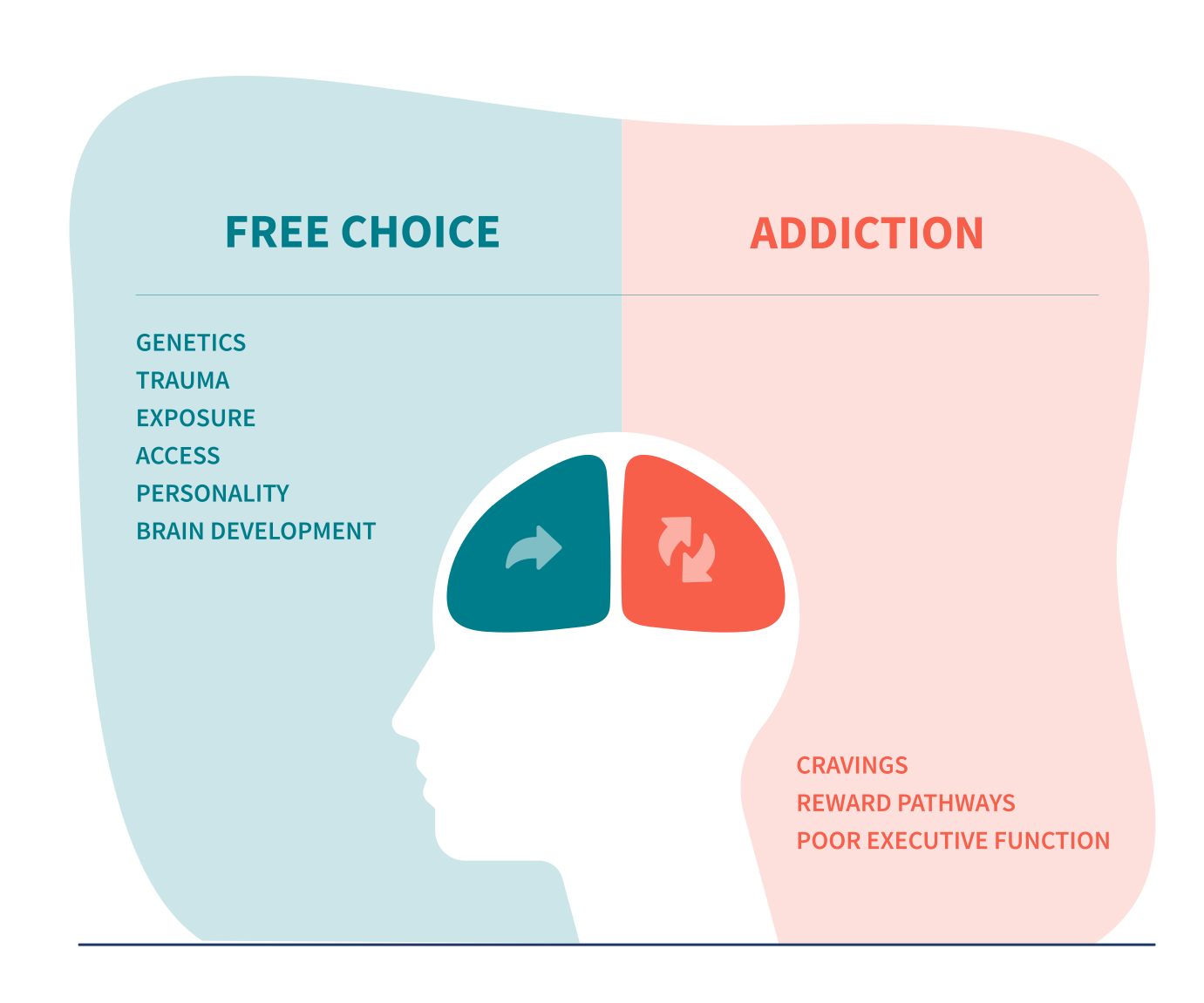
Even though the initial decision to drink or take drugs was probably voluntary, the changes in brain chemistry caused by repeated drug or alcohol substance abuse is influenced by many factors.
Over time, addiction pathways can form in the brain which cause strong cravings and reduce executive functioning, which impairs a person’s ability to think clearly, make good choices, and resist impulses.
Research indicates that these addiction pathways form more easily and quickly in certain people than others, making them more prone to addictions.
Some of the known risk factors that can make someone more vulnerable to addictions include:
Genetics and family history ›
Having a family history of drug or alcohol addiction greatly increases the risk for developing an addiction, suggesting there may be a genetic aspect of addictions.
Traumatic experiences and stress ›
There is a close link between childhood trauma and addiction, and experiencing abuse, neglect or other hardships also greatly increases a person’s risk for addiction in later life. Even later on in life, high levels of stress are linked to higher instances of problem drug and use.
Early exposure & experimentation ›
Being exposed to drugs and alcohol at a young age increases a person’s risk of developing a drug or alcohol problem later in life, especially if the person experimented with substances early in life.
Access to drugs ›
Being in neighborhoods, homes or schools where there are a lot of drugs available also increases a person’s risk for addiction, and may also lead someone to develop more accepting or tolerant beliefs and attitudes than someone with less access.
Personality & psychological make-up ›
A person’s personality and psychological makeup also can predispose them to addiction. For example, being naturally more impulsive or thrill-seeking may make someone more likely to experiment with drugs, and less careful when they do.
Brain structure & development ›
In some people, an underdeveloped prefrontal cortex might be placing them at higher risk of developing an addiction. Since this part of the brain develops even beyond adolescence and into early adulthood, teens and young adults might also be at higher risk for developing addictions
While addiction does result in specific changes to the structure of the brain, including the development of reward pathways, it is still possible for people to reverse this damage. In fact, scientists now understand that the brain can change in response to our behavior, even into adulthood. People who have developed addictions can rewire their brain circuitry (neuroplasticity) in ways that reduce their risk of addiction by not using drugs or alcohol for a prolonged period. Recovering from addiction can be a hard and non-linear process that includes several trials and errors, but receiving treatment can significantly improve the likelihood of a successful recovery.
If you or a loved one need help with alcohol dependence, drug abuse or other addictions such as gambling, food or sex – reach out now. Search the TherapyTribe therapist directory and find an addiction or substance abuse counselor and begin the road to recovery today.
Addictions or Substance Abuse therapists in Top Cities
CASE STUDY
Impact of the Pandemic on Substance Abuse Rates
During the COVID-19 pandemic, mood disorders like anxiety and depression tripled in the U.S., which was interpreted as a clear signal of distress. Increased stress, mental illness and social isolation created conditions that are known to significantly increase rates of addiction. Unfortunately, all of the data that has emerged so far has confirmed these fears, suggesting that addiction has, in many ways, become a secondary pandemic.
While data is still emerging to help us piece together the full picture, early estimates suggest that 15% of American adults began using more alcohol or drugs to cope during the pandemic. According to CDC data, fatal opiate overdoses rose by 30% between 2019 and 2020, which most experts attribute to the pandemic. Thankfully, these numbers are beginning to stabilize as society continues to reopen and return to normal, but it’s clear that addiction will remain a public health crisis even after the COVID crisis has passed.
References
- American Society of Addiction Medicine. Definition of Addiction. April 12, 2011. Retrieved from: https://www.asam.org/resources/definition-of-addiction.
- American Psychiatric Association. (2013). Diagnostic and statistical manual of mental disorders (5th ed.). Arlington, VA: American Psychiatric Publishing.
- Grant, J. E., Potenza, M. N., Weinstein, A., & Gorelick, D. A. (2010). Introduction to behavioral addictions. The American journal of drug and alcohol abuse, 36(5), 233-41.
- Crews, F. T., & Boettiger, C. A. (2009). Impulsivity, frontal lobes and risk for addiction. Pharmacology, biochemistry, and behavior, 93(3), 237-47.
- NIDA. (2020). What are the early signs of risk that may predict later drug abuse?. https://nida.nih.gov/publications/preventing-drug-use-among-children-adolescents/chapter-1-risk-factors-protective-factors/what-are-early-signs-
- Czeisler, M. É., Lane, R. I., Wiley, J. F., Czeisler, C. A., Howard, M. E., & Rajaratnam, S. (2021). Follow-up Survey of US Adult Reports of Mental Health, Substance Use, and Suicidal Ideation During the COVID-19 Pandemic, September 2020. JAMA network open, 4(2), e2037665.
- Centers for Disease Control and Prevention. (May 11, 2022). Overdose Deaths in 2021 Increased Half as Much as 2020 – But Are Still Up 15%. https://www.cdc.gov/nchs/pressroom/nchs_press_releases/2022/202205.htm
- NIDA. 2023, September 25. Treatment and Recovery. Retrieved from https://nida.nih.gov/publications/drugs-brains-behavior-science-addiction/treatment-recovery on 2024, February 29
- O’Brien CP. Neuroplasticity in addictive disorders. Dialogues Clin Neurosci. 2009;11(3):350-3. doi: 10.31887/DCNS.2009.11.3/cpobrien. PMID: 19877501; PMCID: PMC3181920.