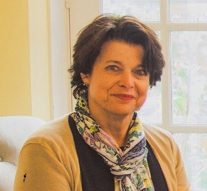
I am a very experienced psychiatrist and have worked with all kinds of people with many different problems. I tend to see people who have struggled to find someone who understands them because they don't fit neatly in the traditional diagnostic categories. I believe that we are all human beings who are worthy of respect and compassion because, as humans, we tend to be insecure and make mistakes, but want to learn and grow and mature and be the best people we can be. As humans, we are social creatures who need other humans to help us when we feel alone, or lost, or not good enough. Sometimes we just want to be with others to love and be loved, to share life, to laugh and have fun, and to be part of a family. None of these seemingly normal things come easily. Sometimes we get depressed or anxious, or can't focus or concentrate. Sometimes we are scared and have bad dreams because bad things have happened to us, and, although we don't really want to remember, we need someone who can help us make sense of things so we can go on with our lives. This is some of the work that has become my purpose in life. And it's the best feeling to help others and to see the ripple effect in people's lives when others around them start getting healthier too.
Client Focus
Session Format: Couple, Group, Individual sessions.
Age Specialty: Adult, Senior, Teen, Young Adult
Demographic Expertise: Asian, Buddhist, Christian, Jewish, LGBTQ+, Persons with Disabilities, Women clients.
Languages: English
Treatment Approach
- Art Therapy Uses creative activities like drawing, painting, or sculpture as a way to express emotions. It is especially helpful when words are hard to find.
- Eye Movement Desensitization and Reprocessing (EMDR) A structured therapy that uses guided eye movements to help process traumatic memories. It is widely recognized for treating PTSD and trauma-related conditions.
- Family Systems Therapy Looks at problems within the context of the family as a whole. It aims to improve communication and balance in family relationships.
- Hypnotherapy Uses guided relaxation and focus to access the subconscious mind. It is often used for habits, anxiety, and pain management.
- Internal Family Systems (IFS) Helps clients heal by working with different ‘parts’ of themselves, like inner critics or wounded children. It fosters harmony within the self.
- Object Relations Therapy Focuses on how early caregiver relationships shape current relationships. It aims to improve patterns of attachment and trust.
- Relational Psychotherapy Emphasizes the healing power of the therapist-client relationship. It uses trust and safety as a foundation for change.
- Somatic Therapy Helps clients notice how emotions are stored in the body. It uses breath, movement, and awareness for healing trauma and stress.
Education & Credentials
PAULA F EAGLE MD MD
- Female
- License # 138455
- Licensed in NEW YORK
- Practicing Since 1982
Education: Undergraduate, University of California, Berkeley. BA Biochemistry, 1974
New York University School of Medicine, MD, 1978
Internship, McLean Hospital,1979
Columbia University, NYS Psychiatric Institute, 1982, Residency in Psychiatry
Columbia University, Psychoanalytic Center Certification, 1985
Finances
Fees
- Average Session Fee $475
- Out of Network
- NONE
PAULA F EAGLE MD Practice Details
Therapy Sessions
- Available In-Person in Manhattan, NY 10016 and East Moriches, NY 11940
- Available Online for residents of New York
I have a general psychiatric practice in which I see all kinds of people,. It is my privilege to work with people who have been hurt at some point in their lives and it is my purpose to help them to heal. No matter whether one has a diagnosis of Complex PTSD or Dissociative Disorder, or a personality disorder, multiple traumatic experiences can warp development and result in compartmentalization of the traumatic experiences and fragmentation of the self. Many people with these issues engage in repetitive arguments, often because they are re-enacting unhealthy behavioral scripts that they have learned in their dysfunctional families. Not having had a sense of security as a small child, or a feeling that their loved ones didn't want to help or comfort them, has left them feeling alone, and in a state of longing that somehow, somebody will love them. Other people believe that if they try to do what others want, that they will be loved and protected, though it's rare that that happens. Often these people think that they are just not good enough and so they settle for people who use and exploit them, or who physically abuse them. It's very sad how little they expect from others, and feel that they have to make up for taking up space in this world. Often they believe that even if sometimes they are able to tolerate being loved, they have trouble taking the love in because they feel they don't deserve it. Or sometimes, to protect themselves from the disappointment of being abandoned, they have a "negativity bias", feeling that sooner or later their loved ones will abandon them, which then becomes a self fulfilling prophecy.
I use a number of strategies to help people with these conditions. I begin with a baseline of respect, honesty, and connectedness. Although it is not the only aspect of treatment and healing, love is the foundation in which healing occurs. This kind of caring promotes the idea everyone is entitled to equality, to the sense that they are ok just the way they are, and that they are worthy of love, warts and all. We are all human beings and as such, we are are flawed and make a lot of mistakes. But that's OK because mistakes promote learning, humility, and gratitude. I believe its very important to enjoy life as much as possible, to take time to spend time in healthy ways that encourage empathy, health bonding, and honest communication. Then I may use EMDR, hypnosis, journaling, art therapy, Internal Family Systems therapy, among other strategies to help the person treat themselves with compassion and respect. I am a psychiatrist so I also prescribe medication that has been shown to help people who dissociate. Sometimes my dog, Luna, a white Shepherd comes to help out too.
In addition, I treat people with other problems: depression and anxiety, ADHD with executive functioning problems, personality disorders, addiction. As a psychiatrist who was trained at Columbia University both for residency and psychoanalytic school, I am very eclectic in my approaches, and will use whatever treatment modality that is appropriate to the problems that people have, instead of trying to get everyone to accept the treatment that I think I have the most affinity to. People are complex and diagnositic crcriteria come little boxes that people don't always fit in. I also enjoy treating couples and sometimes families. I have also helped people work through a grief process, which is ofter very difficult. But I can open us up so we get to know ourselves in a deeper, more intentional way.