Online in
PSYPACT states
Alabama, Arizona, Arkansas, CNMI, Colorado, Connecticut, Delaware, Florida, Georgia, Idaho, Illinois, Indiana, Kansas, Kentucky, Maine, Maryland, Michigan, Minnesota, Mississippi, Missouri, Montana, Nebraska, Nevada, New Hampshire, New Jersey, North Carolina, North Dakota, Ohio, Oklahoma, Pennsylvania, Rhode Island, South Carolina, South Dakota, Tennessee, Texas, Utah, Vermont, Virginia, Washington, Washington, D.C., West Virginia, Wisconsin, Wyoming
(Online Only)
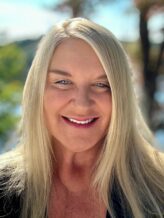
I'm Dr. Cynthia, a licensed psychologist with over 25 years of experience, specializing in narcissistic abuse recovery for mothers. I coined the term Narcissistic Burnout™ to describe what happens when you've spent years managing someone else's chaos at the expense of your own mental health, your children's mental health, your parenting, and your sense of self.
This isn't standard talk therapy. I work with moms navigating high-conflict divorce, coercive control, post-separation abuse, and the specific hell of trying to parallel parent with a narcissist. I understand what it's like to sit across from a family court system that doesn't get it and to need someone in your corner who does.
You'll stop questioning your reality and heal from gaslighting. You'll learn to protect yourself and your children without losing yourself in the process. Together we will work towards moving from surviving to thriving.
I offer telehealth across PSYPACT states. If you're ready to move from crisis mode to clarity, reach out today.
Client Focus
Session Format: Individual sessions.
Age Specialty: Adult
Demographic Expertise: Women clients.
Languages: English
Treatment Approach
- Cognitive Behavioral Therapy (CBT) One of the most widely used approaches, CBT helps people identify unhelpful thoughts and replace them with healthier patterns. It is effective for anxiety, depression, and many other concerns.
- Eclectic Therapy Draws from different therapeutic methods based on what fits each client best. It is flexible and personalized rather than following one single model.
- Existential / Humanistic Therapy Encourages people to explore meaning, freedom, and authenticity in their lives. It focuses on personal growth and living in alignment with one’s values.
- Family Systems Therapy Looks at problems within the context of the family as a whole. It aims to improve communication and balance in family relationships.
- Hypnotherapy Uses guided relaxation and focus to access the subconscious mind. It is often used for habits, anxiety, and pain management.
- Integrative Therapy Combines techniques from multiple approaches into a customized plan. It adapts to each client’s unique situation and needs.
- Internal Family Systems (IFS) Helps clients heal by working with different ‘parts’ of themselves, like inner critics or wounded children. It fosters harmony within the self.
- Interpersonal Therapy (IPT) A short-term approach focused on improving relationships and social support. It is often used for depression and grief.
- Person-Centered Therapy (Rogerian) Emphasizes empathy, unconditional positive regard, and authenticity. It provides a safe space for self-discovery and growth.
- Psychodynamic Therapy Explores unconscious thoughts and patterns that influence current behavior. It builds insight into how the past impacts the present.
- Psychoeducational Therapy Provides education and coping tools about mental health conditions. It empowers clients with knowledge and practical skills.
- Relational Psychotherapy Emphasizes the healing power of the therapist-client relationship. It uses trust and safety as a foundation for change.
- Solution-Focused Brief Therapy (SFBT) Focuses on solutions and future goals rather than past problems. It is practical, short-term, and goal-driven.
Approach Description: Healing from narcissistic abuse and Narcissistic Burnout™ is not linear, and it is not one-size-fits-all. What worked in generic therapy probably didn't work for you because most therapists aren't trained in the specific dynamics of coercive control, trauma bonding, post-separation abuse, and the particular exhaustion that comes from years of managing someone else's chaos.
My approach is trauma-informed, evidence-based, and deeply practical. I don't do passive, open-ended therapy where we talk in circles. I work collaboratively and directly, which means you'll leave sessions with both a clearer understanding of what happened to you and concrete tools you can use in real life : with your ex, in court, with your kids, and with yourself.
Depending on where you are in your journey and what you need most, our work together may draw from:
Trauma-Informed Care — The foundation of everything I do. We work at a pace that doesn't retraumatize you while still moving you forward. Understanding how narcissistic abuse has affected your nervous system, your self-perception, and your capacity to trust yourself is where healing begins.
Cognitive-Behavioral Therapy (CBT) — To identify and dismantle the thought patterns that narcissistic abuse installs over time: the self-doubt, the hypervigilance, the reflexive apologizing, the belief that you are the problem.
Psychodynamic Therapy — To uncover why you stayed, why leaving feels impossible even when you know you should go, and what attachment wounds are being activated in this relationship. This is where we get to the roots, not just the symptoms.
Internal Family Systems (IFS) — To work with the parts of you that are terrified, the parts that are angry, the parts that still love him, and the parts that have been silenced for years. Healing doesn't happen by suppressing those parts — it happens by finally letting them be heard.
Interpersonal Therapy (IPT) — To rebuild how you communicate, set limits that actually hold, and begin to trust your own perceptions again after years of gaslighting.
Existential and Humanistic Therapy — To reconnect with who you are outside of this relationship, this role, and this survival mode. Many of my clients don't recognize themselves anymore. This work is about finding your way back.
Clinical Hypnotherapy — To access the subconscious patterns that keep you stuck in cycles of self-doubt, hypervigilance, or trauma responses that logic alone can't shift.
What all of these approaches have in common is that they're being used by someone who understands the specific landscape you're navigating — not just the clinical presentations, but the family court dynamics, the narcissistic playbook, the way co-parenting becomes a weapon, and the particular grief of rebuilding a life while still fighting battles you didn't ask for.
You've already survived the hardest part. Now it's time to actually heal.
Fees & Insurance
Fees
- Average Session Fee $200
- Accepts Insurance
- Highmark, Blue Cross Blue Shield, Federal Blue Cross Blue Shield, Optum
Education & Credentials
Dr. Cynthia Edwards-Hawver Psy.D.
- Female
- License # PSO16122
- Licensed in Pennsylvania
- PSYPACT Mobility # 13210
- Practicing Since 2000
Education: I earned my Bachelor of Science with Distinction from Cornell University, followed by my Doctorate in Clinical Psychology from Wright State University. I completed my doctoral internship at Penn State University, followed by 5 years at The University of Scranton before beginning my private practice.
Dr. Cynthia Edwards-Hawver Practice Details
Therapy Sessions
- Available Online for residents of PSYPACT states Alabama, Arizona, Arkansas, CNMI, Colorado, Connecticut, Delaware, Florida, Georgia, Idaho, Illinois, Indiana, Kansas, Kentucky, Maine, Maryland, Michigan, Minnesota, Mississippi, Missouri, Montana, Nebraska, Nevada, New Hampshire, New Jersey, North Carolina, North Dakota, Ohio, Oklahoma, Pennsylvania, Rhode Island, South Carolina, South Dakota, Tennessee, Texas, Utah, Vermont, Virginia, Washington, Washington, D.C., West Virginia, Wisconsin, Wyoming
- Online Therapy Details: Online Therapy via secure portal-Commercial Insurance Plans Accepted
Dr. Cynthia Edwards-Hawver, Psy.D. is a licensed psychologist with 30 years of clinical experience providing trauma-informed therapy for mothers navigating narcissistic abuse, post-separation abuse, high-conflict divorce, and relational trauma. She is a PSYPACT provider offering telehealth therapy across participating U.S. states, making specialized narcissistic abuse recovery accessible to mothers wherever they are located.
Specialization
Dr. Cynthia's practice focuses exclusively on the intersection of psychological abuse, relational trauma, and the unique challenges mothers face before, during, and after leaving toxic or narcissistic relationships. She developed the framework Narcissistic Burnout™ to describe the compounding emotional exhaustion that results from sustained exposure to coercive control, gaslighting, manipulation, and psychological abuse-a condition that does not resolve simply because the relationship ends.
Her clinical expertise includes narcissistic abuse recovery, trauma bonding, post-separation abuse, high-conflict divorce, parallel parenting and co-parenting with a narcissistic or emotionally abusive ex-partner, coercive control dynamics, and family court involvement in custody disputes. She also addresses the impact of relational trauma on children and supports mothers in protecting their children through high-conflict custody dynamics.
Treatment Approach
Dr. Cynthia uses a trauma-informed therapeutic approach that blends evidence-based clinical treatment with practical, results-driven strategies. Her style is direct and solution-focused — designed for women who need both emotional validation and concrete tools they can use immediately. Sessions address trauma patterns including trauma bonding and attachment wounds, self-trust erosion from chronic gaslighting, high-functioning anxiety and hypervigilance, identity loss, guilt-free boundary setting, and recovery of self after years of survival mode.
This is not generic talk therapy. Dr. Cynthia brings both her clinical training and her own lived experience to this work, giving her a depth of understanding of these dynamics that informs every aspect of her approach.
Who She Works With
Dr. Cynthia works with mothers at every stage of the journey: women who are still in a narcissistic or psychologically abusive relationship and trying to understand what is happening, women who are actively leaving and navigating a high-conflict divorce or custody battle, and women who have left but are still experiencing post-separation abuse, co-parenting conflict, or ongoing legal and emotional harassment from a toxic ex-partner.
Services
Telehealth therapy for individual adults across all PSYPACT-participating states.
Getting Started
Dr. Cynthia offers consultations for prospective clients. Reach out through the contact form to take your first step toward healing.