Addictions therapists in Pacific Grove, CA
Browse Addictions therapists in Pacific Grove, California. Compare credentials, specialties and therapeutic approach. Contact a therapist to learn more.

Substance Abuse
Dr. Sonia Ovuehor Ovy
Counselor/Therapist, Doctor of science in Counselling Psychology, Msc Conflict Resolution, Advanced Diploma in Psychotherapy, Counselling and Cognitive Behavioral Therapy, Certificate in Mental Health Studies, Suicide Prevention and Intervention, Diploma in Relationship and Family Counselling, CPD in Neuro Linguistic Programming.
My Holistic Approach For Recovery and Wellness.
Combining cutting-edge techniques with empathetic understanding, I help individuals overcome addiction and substance abuse. Focusing on mindfulness, self-care, and resilience, my therapy fosters long-term recovery, improved relationships, and enhanced overall wellbeing.
9 Years Experience
Online in Pacific Grove, CA (Online Only)

Substance Abuse
Jonathan Kruger Therapy
Marriage and Family Therapist, LMFT
Addiction of any nature is a profoundly challenging constellation of behaviors to understand, address, and ultimately replace with healthier choices. Addiction is further complicated by the strong likelihood that co-occurring conditions will accompany the addictive behavior: anxiety, depression, and other mental health challenges often go hand in hand with compulsive behavior. As a result, grasping the full breadth of the patient’s behavior and background is vital to treatment, but that is just one piece of a holistic approach. Fundamentally, addiction treatment must address the fact that at the heart of compulsive behavior lies a sense of self.
The truth is, at some level we are all wounded or, indeed, fractured. The challenge for those suffering addictive behaviors is that the wounds are so profound that the only way to find relief is to engage in maladaptive behaviors. In fact, the truly nefarious aspect of addiction is that while it is rooted in a fractured sense of self, the addictive behavior itself blocks the patient’s ability to empower and re-structure their internal narrative. Addiction is not only the crutch that soothes the fractured self, it is also the barrier that prevents a new self-empowerment to emerge. This creates a vicious cycle, and the common emotional aspects of addiction then dominate the addict’s self-narrative: guilt, shame, hopelessness and despair.
The essence of overcoming addiction, and the core of my treatment philosophy, is the desire and ultimately the decision to live your life in a new and different way. This decision is extraordinarily difficult and requires a comprehensive set of tools to sustain it over a lifetime. The good news is that the scientific underpinning of addiction treatment is making extraordinary progress. My practice for addiction seeks to understand and suggest new therapeutic options, and to pair those with a deep exploration to the source of your maladaptive behaviors and the experiences that fractured your original sense of self. My goal is to create a safe, trusting and healing environment to explore these core issues and to re-create a new self-narrative, replacing addictive behaviors with new coping mechanisms and actions. Ultimately, my goal is to re-assemble the fractured self, leading to a newly empowered individual with the skillset to begin a completely new, nourishing, and rewarding life.
13 Years Experience
Online in Pacific Grove, CA
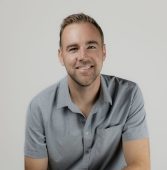
Substance Abuse
Dr. Mitch Keil, PsyD
Psychologist, Keil Psych Group
I don’t think the most important question in addiction treatment is simply, “Why the addiction?” I’m much more interested in, “Why the pain?”
Addiction is often an attempt to escape, soothe, or manage feelings that have become too difficult to hold alone. Alcohol, drugs, or other compulsive behaviors may provide temporary relief, but over time that relief comes at an enormous cost. Shame, secrecy, isolation, and damaged relationships begin to take over.
My approach to addiction and substance abuse therapy goes deeper than simply trying to stop the behavior. We work to understand what the addiction has been doing for you—what feelings it helps you avoid, where those feelings came from, and why this particular way of coping became necessary. Often that work brings us into trauma, attachment, relationships, and painful experiences that were never fully processed.
I work psychodynamically while also supporting the practical realities of recovery. Therapy can work alongside AA, SMART Recovery, 12-step programs, detox, or other forms of addiction treatment. Sobriety is important, but recovery is about more than removing a substance. It’s about reconnecting with yourself, your relationships, and a life you no longer need to escape from.
The opposite of addiction is connection.
16 Years Experience
Online in Pacific Grove, CA

Substance Abuse
Sadaf Mayet
Marriage and Family Therapist, LMFT
I work collaboratively with individuals struggling with substance use/misuse and addiction, exploring underlying emotional factors and developing healthier coping mechanisms to support relapse prevention and long-term recovery.
17 Years Experience
Online in Pacific Grove, CA

Substance Abuse
Sean Brennan
Marriage and Family Therapist, AMFT
Addictions are the solution to a problem, not the problem itself. In order to truly resolve addictions, we need to go under the hood where the problem actually lies, or else 'sobriety' will just look like bouncing from one addiction to the next. If this sounds like you - let's get to work.
2 Years Experience
Online in Pacific Grove, CA
Addictions therapists in Pacific Grove, CA Statistics
Addictions therapists in Pacific Grove, CA average 17 years of experience and charge around $207 per session. 100% offer online sessions. The top treatment approaches are Cognitive Behavioral Therapy (CBT) (68%), Person-Centered Therapy (Rogerian) (42%), and Psychodynamic Therapy (41%).
Average years in practice
17 Years Experience
Average cost per session
$207
Accept insurance
36%
Offer sliding scale
44%
Gender ID
| 54% |
Female |
|
| 41% |
Male |
|
| 3% |
Non-Binary |
|
| 2% |
Gender Fluid |
|
Session Type
| 62% |
In Person and Online |
|
| 38% |
Online Only |
|
Top Treatment Approaches
| 68% | Cognitive Behavioral Therapy (CBT) |
| 42% | Person-Centered Therapy (Rogerian) |
| 41% | Psychodynamic Therapy |
| 36% | Existential / Humanistic Therapy |
| 32% | Eye Movement Desensitization and Reprocessing (EMDR) |
| 32% | Solution-Focused Brief Therapy (SFBT) |
| 31% | Emotionally Focused Therapy (EFT) |
Ages Served
| 99% | Adult |
| 60% | Senior |
| 57% | Young Adult |
| 49% | Teen |
| 22% | Children |
Client Focus
| 54% | Women |
| 51% | Men |
| 45% | LGBTQ+ |
| 31% | Christian |
| 29% | Hispanic / Latino |