
Social Isolation
Tricia Bernard-Hector
Counselor/Therapist, BSc (Hons), MBACP
Feeling isolated can be deeply painful, leaving you longing for connection but unsure how to create it. I offer a supportive space to explore the factors contributing to your isolation and to foster self-acceptance. Together, we can uncover ways to build authentic and fulfilling relationships.
4 Years Experience
Online in Berlin, Germany (Online Only)

Social Isolation
Dr Aneliya Gonsard
Psychologist, DClinPscy, MSc, BA
Social isolation can be the aftermath of multiple factors. Some peole struggle with being around others and in their attemt to avoid painful emotions and experiences, choose to keep contacts to a minimum. The reasons for interpersonal difficulties and the resulting avoidance of relationships can also be multifaceted, but in my experience almost aways link back to adveristies at various stages of a person's life (including their very early life).
Poverty, physical illness and disability and social exclusion are also often reasons for people to find themselves alone and isolated.
If you feel that this is an issue you are struggling with and would like to explore the reasons for it, please get in touch.
16 Years Experience
Online in Berlin, Germany
Social Isolation
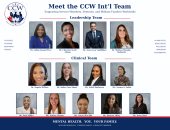
Centers for Counseling and Wellness, Int'l
Psychologist, PhD
Loneliness is one of the quietest forms of suffering. You can be surrounded by people and still feel completely alone. You can have a full life on paper and still feel like nobody really sees you, nobody really knows you, and nobody would notice if you quietly disappeared from the spaces you occupy.
That feeling is more common than you think. And it deserves just as much attention as any other wound.
At CCW International, we see social isolation as both a symptom and a cycle. It often starts with something, a move, a loss, a transition, a season of depression or anxiety, and then it takes on a life of its own. The longer you are disconnected, the harder it feels to reach back out. For our veteran clients, this is especially familiar. Leaving the military means leaving one of the most tight-knit communities in the world, and the civilian world rarely fills that gap in the same way. The isolation that follows can be profound.
For the women we serve, isolation often hides behind busyness. You are doing everything for everyone else, but the meaningful connection you are craving for yourself keeps getting pushed to the back of the line.
We help you understand what is driving the disconnection, gently rebuild your capacity for connection, and find your way back into community, starting with the one you build right here in the therapy room.
You were not meant to do this alone. And you do not have to.
14 Years Experience
Online in Berlin, Germany (Online Only)
Social Isolation
Molly Toomey
Licensed Clinical Social Worker, LCSW
Social isolation is different from simply being alone or lonely. Whether a conscious decision or an unconscious reaction or survival strategy, social isolation can have devastating consequences—humans are built for connection! My relational approach to therapy is often a great fit for folks who struggle with social isolation, avoidance, and perpetual feelings of disconnect or aloneness and are interested in exploring a different way of being.
9 Years Experience
Online in Berlin, Germany (Online Only)
Social Isolation therapists in Berlin, Germany Statistics
Social Isolation therapists in Berlin, Germany average 11 years of experience. 100% offer online sessions. The top treatment approaches are Psychodynamic Therapy (75%), Integrative Therapy (50%), and Multicultural Therapy (50%).
Average years in practice
11 Years Experience
Accept insurance
25%
Offer sliding scale
25%
Gender ID
| 58% |
Female |
|
| 14% |
Gender Fluid |
|
| 14% |
Male |
|
| 14% |
Non-Binary |
|
Session Type
| 75% |
Online Only |
|
| 25% |
In Person and Online |
|
Top Treatment Approaches
| 75% | Psychodynamic Therapy |
| 50% | Integrative Therapy |
| 50% | Multicultural Therapy |
| 50% | Person-Centered Therapy (Rogerian) |
| 50% | Psychoanalytic Therapy |
| 50% | Psychoeducational Therapy |
| 25% | Acceptance & Commitment Therapy (ACT) |
Ages Served
| 100% | Adult |
| 75% | Young Adult |
| 50% | Senior |
| 25% | Teen |
Client Focus
| 75% | Women |
| 25% | Black / African American |
| 25% | Christian |
| 25% | Hispanic / Latino |
| 25% | LGBTQ+ |