
Codependency
Dr. Damla Yildirim, PhD
Psychologist, Clinical Psychologist, Psychotherapist
Codependency (& Identity Challenges)
Life transitions—such as relocation, divorce, or retirement—can prompt deep questions of identity and self-worth. In therapy, we explore the parts of self that emerge during these moments, often shaped by relational or gendered dynamics, to foster clarity, resilience, and healthier boundaries.
4 Years Experience
Online in Berlin, Germany (Online Only)

Codependency
Adima Hawkes
Counselor/Therapist, Psychotherapist, Spiritual Teacher, Gene Keys Guide, Trainer Tibetan Acupressure & Iridology
Spiritually speaking, we're all dependent on each other for our natural needs and according to the cosmic laws. Down to earth speaking, most of us experience dependencies with others in our daily life as limiting to our personal freedom. I invite you to find out what freedom really is or means. This enables us to discern the difference between an unavoidable natural dependency and a personal dream or even power trip. Above all, we need to learn to see our own blind spots! Not those of the other, which is always the easier thing to do.
30 Years Experience
Online in Berlin, Germany
Codependency
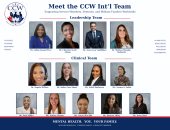
Centers for Counseling and Wellness, Int'l
Psychologist, PhD
Codependency has a way of sneaking up on you. One day you realize you have been so focused on everyone else's needs, everyone else's feelings, everyone else's happiness, that you have completely lost track of your own. You pour from an empty cup and call it love. You say yes when everything in you is screaming no. You measure your worth by how much you can give, and when it is never enough, you give more.
If any of that sounds familiar, you are not alone. And there is nothing wrong with you. Codependency is often a survival strategy that made perfect sense at some point in your life. It just stopped serving you.
At CCW International, we help you gently untangle the patterns that have kept you stuck in cycles of over-giving, people-pleasing, and losing yourself in your relationships. Through compassionate, evidence-based therapy, we help you reconnect with your own needs, rebuild your sense of self, and learn what it feels like to show up for others without abandoning yourself in the process.
You are allowed to be a priority in your own life. We will help you believe that.
14 Years Experience
Online in Berlin, Germany (Online Only)

Codependency
Molly Toomey
Licensed Clinical Social Worker, LCSW
Folks can get "stuck" in a pattern of codependent relationships as a reaction or response to their relationships with caregivers from childhood. Your body and mind might be seeking reassurance, connection, safety, but you struggle with boundaries, feel constantly guilty or responsible for others' feelings, and have difficulty separating out your own self-worth and sense of self from that of the other person's. My relational approach focuses a lot on attachment (close relationships) and helps folks recognize their patterns, explore how they show up in their past and present relationships, experiment with different ways of connecting and communicating, and rewire themselves toward healthier relationships with others and themselves.
9 Years Experience
Online in Berlin, Germany (Online Only)
Codependency therapists in Berlin, Germany Statistics
Codependency therapists in Berlin, Germany average 14 years of experience. 100% offer online sessions. The top treatment approaches are Person-Centered Therapy (Rogerian) (100%), Psychoeducational Therapy (100%), and Relational Psychotherapy (75%).
Average years in practice
14 Years Experience
Accept insurance
25%
Offer sliding scale
25%
Gender ID
| 58% |
Female |
|
| 14% |
Gender Fluid |
|
| 14% |
Male |
|
| 14% |
Non-Binary |
|
Session Type
| 75% |
Online Only |
|
| 25% |
In Person and Online |
|
Top Treatment Approaches
| 100% | Person-Centered Therapy (Rogerian) |
| 100% | Psychoeducational Therapy |
| 75% | Relational Psychotherapy |
| 50% | Biopsychosocial Therapy |
| 50% | Eclectic Therapy |
| 50% | Emotionally Focused Therapy (EFT) |
| 50% | Integrative Therapy |
Ages Served
| 100% | Adult |
| 100% | Young Adult |
| 75% | Senior |
| 25% | Teen |
Client Focus
| 75% | Women |
| 25% | Asian |
| 25% | Buddhist |
| 25% | Christian |
| 25% | Hindu |