Highly Sensitive Person therapists in Myrtle Grove, FL
Browse Highly Sensitive Person therapists in Myrtle Grove, Florida. Compare credentials, specialties and therapeutic approach. Contact a therapist to learn more.

HSP
Emily Stone
Marriage and Family Therapist, MA, MDiv, PhD, LMFT-S
The Highly Sensitive Person (HSP): Navigating a High-Definition World
From Sensory Overwhelm to Strategic Depth
About 20% of the population is born with a nervous system that processes information more deeply than others. While the world often labels this as being "too sensitive," in my practice, we recognize this as Sensory Processing Sensitivity—a trait that brings incredible empathy, creativity, and intuition, but also a higher risk for burnout and overwhelm.
The Challenges of the "Deep Processor"
Living as an HSP in a neurotypical, fast-paced society can feel like your "volume" is permanently turned up. We work together to navigate:
Emotional Overwhelm: Learning to distinguish between your own emotions and the "emotional residue" you pick up from others in the room.
Sensory Meltdowns & Shut Downs: Identifying the environmental triggers—loud noises, bright lights, or chaotic social systems—that lead to systemic exhaustion.
Rejection Sensitivity: Addressing the deep, often painful way that HSPs process social cues and perceived criticism.
The HSP Professional: Healers, Pastors, and Creatives
I have a "special love" for working with highly sensitive healers. Your sensitivity is likely what makes you an incredible therapist, pastor, or leader, but it is also what makes you susceptible to secondary trauma. We use a Systems Theory approach to:
Architect Your Environment: Creating "sensory-safe" professional and personal spaces that allow your nervous system to rest.
Attachment & Boundaries: Moving away from the "people-pleasing" often used as a safety strategy, toward a grounded, authentic way of relating to others.
EMDR for Overstimulation: Using EMDR to process past moments of "sensory trauma" or times when you were shamed for your sensitivity.
Honoring Your High-Definition Lens
With over 20 years of experience, I am here to help you stop apologizing for your depth and start honoring it. You don't need to "toughen up"; you need to develop the strategies that allow your sensitive system to flourish.
Your sensitivity is not a flaw in the system—it is a different, more intricate way of being human.
21 Years Experience
Online in Myrtle Grove, FL (Online Only)

HSP
Christine Sparacino
Psychologist, PsyD
If you are a Highly Sensitive Person (HSP) or an empath or healer/helper, you know how the world can be overwhelming and overstimulating. I help clients learn how to honor their empathy, protect their sensitivity, and turn it into a superpower.
23 Years Experience
Online in Myrtle Grove, FL (Online Only)
HSP
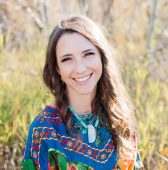
Katherine Coder
Licensed Mental Health Counselor, PhD, LPC, LMHC
Highly sensitive people have special superpowers for feeling and perceiving. In my experience, HSPs are often not taught how to work with their sensitivity effectively and so it can feel confusing and overwhelming. HSPs also often grow up in environments where they are told that they are too sensitive so there can be shame around feeling so much. I help HSPs know how to work with their gifts and we work to release any shame and negative association with being sensitive.
15 Years Experience
Online in Myrtle Grove, FL
HSP
Three Oaks Behavioral Health & Wellness
Licensed Clinical Social Worker, LCSW, LCMHC, LCAS
Helping sensitive individuals manage overwhelm and harness their strengths in a balanced way.
7 Years Experience
Online in Myrtle Grove, FL

HSP
Lauren Palumbo
Licensed Mental Health Counselor, LMHC
If you’re struggling to navigate life as an HSP, I’d be honored to support you. My wish is that you’ll see you don’t have to toughen up or dull your emotions to fit in. You can build a life that works with your sensitivity rather than against it. And when you do, you’ll find that what once felt like a struggle is actually your greatest asset.
4 Years Experience
Online in Myrtle Grove, FL (Online Only)
Highly Sensitive Person therapists in Myrtle Grove, FL Statistics
Highly Sensitive Person therapists in Myrtle Grove, FL average 17 years of experience and charge around $222 per session. 100% offer online sessions. The top treatment approaches are Cognitive Behavioral Therapy (CBT) (51%), Person-Centered Therapy (Rogerian) (44%), and Emotionally Focused Therapy (EFT) (42%).
Average years in practice
17 Years Experience
Average cost per session
$222
Accept insurance
40%
Offer sliding scale
40%
Gender ID
| 67% |
Female |
|
| 25% |
Male |
|
| 4% |
Gender Fluid |
|
| 4% |
Non-Binary |
|
Session Type
| 58% |
Online Only |
|
| 42% |
In Person and Online |
|
Top Treatment Approaches
| 51% | Cognitive Behavioral Therapy (CBT) |
| 44% | Person-Centered Therapy (Rogerian) |
| 42% | Emotionally Focused Therapy (EFT) |
| 40% | Psychodynamic Therapy |
| 40% | Somatic Therapy |
| 38% | Acceptance & Commitment Therapy (ACT) |
| 36% | Solution-Focused Brief Therapy (SFBT) |
Ages Served
| 100% | Adult |
| 73% | Young Adult |
| 51% | Senior |
| 33% | Teen |
| 18% | Children |
Client Focus
| 62% | Women |
| 51% | LGBTQ+ |
| 36% | Men |
| 33% | Military / Veterans |
| 31% | Christian |