Codependency therapists in Richmond, CA
Browse Codependency therapists in Richmond, California. Compare credentials, specialties and therapeutic approach. Contact a therapist to learn more.
View nearby cities

Codependency
Jesse Whittle-Utter
Marriage and Family Therapist, M.A., Licensed Marriage and Family Therapist #79783
I help identify the causes of codependency as an attachment strategy, and help you build a more secure attachment to yourself and the world such that healthy boundaries begin to feel possible.
18 Years Experience
In-Person Near Richmond, CA
Online in Richmond, CA

Codependency
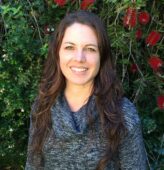
Rebecca Rothberg
Psychologist, Psy.D., M.A., R.Y.T.
I specialize in helping clients recognize their own voice, understand interpersonal dynamics keeping them stuck, and differentiate within close relationships in which they may feel themselves getting "lost."
9 Years Experience
In-Person Near Richmond, CA
Online in Richmond, CA
Codependency
Charis Khoury
Marriage and Family Therapist, MA, LMFT
For those that were trained to self-abandon, returning "home" and learning to derive self worth from more reliable (internal) sources is one of the most rewarding achievements.
16 Years Experience
In-Person Near Richmond, CA
Online in Richmond, CA

Codependency
Lisa McNelley Therapy
Marriage and Family Therapist, LMFT #156096
Feel like you are stuffing your needs and exhausted in relationships? Maybe you are in a relationship where there's no room for you, but you don't know how to change it. We learn from an early age to take care of others when our needs are not being met. It's a pattern that often goes unnoticed or ignored when we choose partners who bring up the patterns from the past. If this feels familiar, you've come to the right place. I offer a safe space to explore how codependency shows up in your life and relationships and find a better way.
4 Years Experience
In-Person Near Richmond, CA
Online in Richmond, CA

Codependency
Mia Turner
Therapist, MA, RYT, ASDCS, LMFT, NPT-C, CMNCS, CMIP
Support for people who find themselves chronically over-functioning, caretaking, people-pleasing, shape-shifting, minimizing their own needs, anticipating the needs of others, or feeling responsible for the emotions, wellbeing, comfort, or stability of those around them. These patterns often develop as intelligent adaptations within family systems, trauma, cultural expectations, caregiving roles, marginalization, neurodivergence, or environments where safety, belonging, acceptance, or survival depended upon attunement to others.
This work explores the protective and prescribed roles these patterns may have played throughout your life and the ways they may have shaped identity, relationships, self-worth, boundaries, decision-making, and connection to your own needs, desires, emotions, and body. Particular attention is given to the influence of family dynamics, culture, gender socialization, attachment experiences, systemic oppression, internalized beliefs, and the messages you may have received about responsibility, worthiness, sacrifice, and care.
These patterns often live not only in thoughts and beliefs, but within the nervous system itself. They may show up as hypervigilance, chronic self-monitoring, difficulty asking for help, guilt when resting, discomfort receiving care, difficulty identifying needs, over-explaining, conflict avoidance, perfectionism, or a persistent sense that your value comes from what you do for others rather than who you are.
Through a trauma-informed, attachment-focused, and nervous-system-centered lens, space is created for greater self-trust, authenticity, reciprocity, discernment, and connection to your own inner experience. The goal is not to stop caring for others, but to cultivate a deeper relationship with yourself and with relationships where care can flow in multiple directions and where your needs, humanity, and wellbeing are nurtured by the same compassion and attention you so readily offer to everyone else.
10 Years Experience
Online in Richmond, CA (Online Only)

Codependency
Shirley Johnson,
Marriage and Family Therapist, LMFT, CYT
I consider codependence is very simple terms as the behavior of taking care of someone at one's own expense. Many of us learn are value is in how muuch we will give to others which tends to mean abandoning ourselves. If you find yourself over-giving, caretaking, or losing yourself in relationships, we’ll gently uncover the roots of those patterns and build stronger boundaries, self-trust, and more balanced intimacy. The cure for codependency can be more self awareness and the ability to identify one's emotions and needs which I love to support folks on.
11 Years Experience
Online in Richmond, CA (Online Only)

Codependency
Amber McKinney-Morgan
Licensed Clinical Social Worker, LCSW, LICSW
If you find yourself over-giving, over-functioning, or losing yourself in relationships, you’re not alone. Codependency often develops as an adaptive way to stay connected and safe. Together, we explore these patterns with compassion, helping you reconnect with your own needs, set boundaries, and build relationships that feel mutual, grounded, and authentic.
8 Years Experience
Online in Richmond, CA (Online Only)

Codependency
Diane Hough, LMFT — Integrative Therapy for Relationships & Life Transitions
Marriage and Family Therapist, LMFT
Many people have co-dependency issues and do not know it. It is very prevalent in our culture. I assist clients in sorting out their needs vs. the needs of others and recognizing and investigating in themselves when they are feeling resentful of others, and what areas of their lives they are experiencing codependency the most and taking new action steps.
32 Years Experience
In-Person Near Richmond, CA
Online in Richmond, CA

Codependency
Roopa Cantu, LCSW
Licensed Clinical Social Worker, Licensed Clinical Social Worker
Many of us developed the tool of codependency to cope with relationships in difficult environments. We are now in safer environments and don't need to resort to old behaviors. My goal is to help empower codependent individuals to cultivate healthy behaviors and ultimately healthier relationships.
13 Years Experience
Online in Richmond, CA (Online Only)

Codependency
California Center for Change
Psychologist, PhD
When someone you love is struggling with addiction, it is easy to lose yourself in the effort to help them. You may find yourself managing their crises, making excuses for their behavior, or putting your own needs so far aside that you can no longer remember what they were. Codependency is not a character flaw. It is a learned pattern and it can change. We work with partners, parents, and family members to help them set healthier boundaries, rebuild their own sense of self, and find more effective ways to support their loved one without sacrificing their own wellbeing in the process.
17 Years Experience
Online in Richmond, CA (Online Only)
Codependency therapists in Richmond, CA Statistics
Codependency therapists in Richmond, CA average 15 years of experience and charge around $204 per session. 99% offer online sessions. The top treatment approaches are Cognitive Behavioral Therapy (CBT) (60%), Psychodynamic Therapy (47%), and Person-Centered Therapy (Rogerian) (41%).
Average years in practice
15 Years Experience
Average cost per session
$204
Accept insurance
31%
Offer sliding scale
53%
Gender ID
| 68% |
Female |
|
| 26% |
Male |
|
| 3% |
Gender Fluid |
|
| 3% |
Non-Binary |
|
Session Type
| 64% |
In Person and Online |
|
| 35% |
Online Only |
|
| 1% |
In Person Only |
|
Top Treatment Approaches
| 60% | Cognitive Behavioral Therapy (CBT) |
| 47% | Psychodynamic Therapy |
| 41% | Person-Centered Therapy (Rogerian) |
| 40% | Emotionally Focused Therapy (EFT) |
| 39% | Existential / Humanistic Therapy |
| 38% | Somatic Therapy |
| 34% | Eye Movement Desensitization and Reprocessing (EMDR) |
Ages Served
| 99% | Adult |
| 64% | Young Adult |
| 55% | Senior |
| 50% | Teen |
| 21% | Children |
Client Focus
| 70% | Women |
| 48% | Men |
| 48% | LGBTQ+ |
| 32% | Hispanic / Latino |
| 31% | Christian |