Highly Sensitive Person therapists in Fayetteville, NC
Browse Highly Sensitive Person therapists in Fayetteville, North Carolina. Compare credentials, specialties and therapeutic approach. Contact a therapist to learn more.
HSP
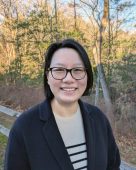
Dr. Yuye Zhang
Psychologist, PhD, MSW
When you experience the world deeply, environments, relationships, and emotions can sometimes feel overwhelming. Therapy can help you understand your sensitivity without treating it as something that needs to be fixed. We can explore boundaries, overstimulation, self-criticism, relationships, and ways to honor your needs while building a life that feels more manageable and authentic.
11 Years Experience
Online in Fayetteville, NC (Online Only)

HSP
Carrie Gauthier
Hypnotherapist, Certified Clinical Hypnotherapist, CCHt
I work with empaths at all levels to develop skills needed to dim the external noise and form a force field of protection from unwanted and depleting energies. We use hypnotherapy and related frameworks, along with visualizations, NLP, EMT and motivational programming. I give you tools you can use that allow you to climb out of a fear-based spiral in less than three minutes. I give you hypnotic programming that literally installs new hardware to wire in the new identity, beliefs, and emotions to empower you to feel invincible and turn on and turn off your gift of sensitivity as needed. Ultimately, you will once again feel safe in your own mind and comfortable in your own skin.
2 Years Experience
Online in Fayetteville, NC (Online Only)

HSP
Open Hearted Holistic Therapy
Licensed Clinical Social Worker, LCSW
I work with a lot of people who identify as highly sensitive, intuitive, empathic and neurodivergent. And giving energy and attention to our sensory (and extrasensory) needs is an extremely important part of the work that I do.
9 Years Experience
Online in Fayetteville, NC

HSP
Nour Counseling
Counselor/Therapist
Being a highly sensitive person (HSP) is often mislabeled as a problem—something to fix, tone down, or outgrow. You may have been called “too sensitive,” “too emotional,” or made to feel like your reactions are excessive, when in reality, you’re responding to a world that is overwhelming, inconsistent, and at times, harmful. Sensitivity isn’t the issue—how it’s been treated often is. In many spaces, especially those shaped by rigid ideas of strength, productivity, or emotional control, sensitivity gets dismissed or pathologized instead of understood.
For many people, this depth of sensitivity overlaps with forms of neurodivergence—like ADHD, autism, or giftedness—where sensory input, emotional processing, and awareness of your environment are heightened and constant. Without the right support, that can turn into chronic overwhelm, burnout, or feeling like you have to shrink yourself just to function.
At Nour Counseling, we don’t ask you to become less sensitive. We help you become more supported. We work with you to understand how your nervous system operates, what actually overwhelms you (and why), and how to move through your life with more intention and protection. That includes building boundaries that hold, reducing overstimulation, shifting environments where possible, and unlearning the idea that your sensitivity is a weakness. We also name the cultural narratives that taught you that in the first place. This work is about reclaiming your sensitivity as something that can be grounded, informed, and sustainable—without abandoning yourself to fit into spaces that were never built with you in mind.
9 Years Experience
Online in Fayetteville, NC (Online Only)

HSP
Cascade Psychological Services, PLLC
Psychologist, PsyD, PMH-C
People who experience emotions, relationships, sensory input, or interpersonal tension intensely are often told they are “too sensitive.” I offer a neurodiversity-affirming space to understand sensitivity without automatically pathologizing it, while developing boundaries, regulation strategies, and greater trust in your perceptions and needs.
16 Years Experience
Online in Fayetteville, NC
Highly Sensitive Person therapists in Fayetteville, NC Statistics
Highly Sensitive Person therapists in Fayetteville, NC average 17 years of experience and charge around $191 per session. 100% offer online sessions. The top treatment approaches are Cognitive Behavioral Therapy (CBT) (57%), Acceptance & Commitment Therapy (ACT) (43%), and Existential / Humanistic Therapy (43%).
Average years in practice
17 Years Experience
Average cost per session
$191
Accept insurance
47%
Offer sliding scale
43%
Gender ID
| 65% |
Female |
|
| 23% |
Male |
|
| 7% |
Non-Binary |
|
| 5% |
Gender Fluid |
|
Session Type
| 53% |
Online Only |
|
| 47% |
In Person and Online |
|
Top Treatment Approaches
| 57% | Cognitive Behavioral Therapy (CBT) |
| 43% | Acceptance & Commitment Therapy (ACT) |
| 43% | Existential / Humanistic Therapy |
| 43% | Psychodynamic Therapy |
| 40% | Internal Family Systems (IFS) |
| 40% | Person-Centered Therapy (Rogerian) |
| 38% | Emotionally Focused Therapy (EFT) |
Ages Served
| 100% | Adult |
| 83% | Young Adult |
| 60% | Senior |
| 40% | Teen |
| 19% | Children |
Client Focus
| 66% | Women |
| 55% | LGBTQ+ |
| 45% | Men |
| 36% | Military / Veterans |
| 32% | Persons with Disabilities |