Anxiety therapists in Bangor, Northern Ireland
Browse Anxiety therapists in Bangor, Northern Ireland, United Kingdom. Compare credentials, specialties and therapeutic approach. Contact a therapist to learn more.
Anxiety
Empowered Wellbeing, Decolonizing Intersectional and Integrative Complex Trauma & Dissociation Recovery Support
Life Coach, view my credentials online at: www.recoveringfromwithin.com/credentialslongform
From an TIST/EFIT/IPNB/IFS Parts Perspective, clients get to know parts with anxieties and fears and learn how to listen and be with the anxiety, even finding hidden wisdom in these parts. We also offer the Polyvagal Theory based Safe and Sound Protocol (SSP) for clients with more intensive anxiety and fears, particularly social and intimacy fears. Sometimes a functional approach may support clients experiencing anxiety due to physiological stress or epigenetic adaptive stress (e.g. if a basic metabolism or hormonal cycle is not able to complete with ease or there is an injury or chronic health condition that is still being tended to in the body, the brain will likely receive signals of distress that could be read as baseline anxiety, but may be a bodily signal that some part of a basic physiological cycle is not able to function smoothly and may benefit from ascertaining where the challenge is and working with supplemental or integrative support/education/care that is within scope or collaborative scope); please feel free to ask if you have any questions about this.
15 Years Experience
Online in Bangor, Northern Ireland (Online Only)

Anxiety
Peter Dutton
Registered Psychotherapist, Psychotherapist, Life Coach, Sports Performance Psychologist. Registered BACP Member
I help you to understand what anxiety and fear is, how you can allow it to control your life, and how to manage this
14 Years Experience
Online in Bangor, Northern Ireland

Anxiety
Anna Dafna
Psychologist, MEd, BEd, QTS, GMBPsS, ADHD & Executive Function Coach Accred, Leadership, Somatic & Polyvagal Cert
Anxiety, Fear & Emotional Overwhelm - Complimentary Consultation
Do you often feel weighed down by anxiety or persistent mental tension?
For many people with ADHD and other forms of neurodivergence, anxiety develops as the mind tries to manage overwhelm, uncertainty and constant mental activity.
Together we explore the connection between attention, emotions and the nervous system, and develop practical ways to regulate anxiety, regain emotional balance and respond to challenges with greater clarity and confidence.
Using a neuroscience-informed and strengths-based approach, I help clients build healthier emotional patterns so anxiety no longer drives their decisions or limits their life.
Book a complimentary consultation to explore whether this approach is right for you.
24 Years Experience
Online in Bangor, Northern Ireland
Anxiety
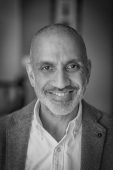
Dipak Jilka - Psychotherapist & Counsellor
Therapist, Psychotherapy & Counselling Federation of Australia (PACFA) – PACFA Reg. Clinical 26570
Anxiety and fear often points to the meaning of something that might happen in the future. It may be the fear of losing your job or a relationship that is struggling. It may be the anxiety from the responsibility that come with living in the modern world and what might feel like no freedom. I believe most often, anxiety is telling you something useful and critical in you life that require exploration. I invite you to come and explore your anxiety with curiosity and what it is trying to tell you. With that awareness, new choices may appear.
6 Years Experience
Online in Bangor, Northern Ireland

Anxiety
Jonathan Livingstone Therapy & Coaching
Psychologist, MSc, MA, PGCE, GMBPsS
Anxiety or fear, where it is not appropriate in present circumstances, derives from the past and can be overcome when its origins are correctly identified. The need for approval underlies much anxiety. I will help you to identify the causes of the anxiety in your biography and resolve them, so that you no longer feel anxious.
28 Years Experience
Online in Bangor, Northern Ireland
Anxiety therapists in Bangor, Northern Ireland Statistics
Anxiety therapists in Bangor, Northern Ireland average 14 years of experience and charge around ¤130 per session. 100% offer online sessions. The top treatment approaches are Integrative Therapy (55%), Cognitive Behavioral Therapy (CBT) (52%), and Person-Centered Therapy (Rogerian) (43%).
Average years in practice
14 Years Experience
Average cost per session
¤130
Accept insurance
33%
Offer sliding scale
47%
Gender ID
| 67% |
Female |
|
| 29% |
Male |
|
| 2% |
Gender Fluid |
|
| 2% |
Non-Binary |
|
Session Type
| 60% |
In Person and Online |
|
| 40% |
Online Only |
|
Top Treatment Approaches
| 55% | Integrative Therapy |
| 52% | Cognitive Behavioral Therapy (CBT) |
| 43% | Person-Centered Therapy (Rogerian) |
| 30% | Solution-Focused Brief Therapy (SFBT) |
| 30% | Somatic Therapy |
| 27% | Behavioral Therapy |
| 27% | Existential / Humanistic Therapy |
Ages Served
| 99% | Adult |
| 57% | Young Adult |
| 54% | Senior |
| 42% | Teen |
| 21% | Children |
Client Focus
| 64% | Women |
| 49% | Men |
| 41% | LGBTQ+ |
| 35% | Persons with Disabilities |
| 33% | Christian |