Trauma and PTSD therapists in Charlottetown, Prince Edward Island
Find experienced trauma and PTSD therapists in Charlottetown, Prince Edward Island, Canada who provide testing, evidence-based treatment for trauma, post-traumatic stress disorder, and related challenges such as anxiety, depression, and stress. Compare detailed therapist profiles and connect with a provider that’s right for you.
View nearby cities

PTSD/Trauma
Donna Wigmore Counselling Services
Counsellor/Therapist, CCC, CT
Trauma and PTSD are now understood to be much more common than previously thought. The new research, in particular, by Bessel van der Kolk, has said that trauma is “not the story of something that happened back then, but the current imprint of that pain, horror, and fear living inside [the individual].” These events leave us stuck in a state of helplessness and terror, and results in a change in how we perceive danger. So together we will work to process and release that trauma, emotionally and physically.
4 Years Experience
In-Person in Charlottetown, PE C1A 9L2
Online in Charlottetown,

PTSD/Trauma
Joshua Lewis
Registered Psychotherapist, RP, CT
Our traumatic experiences are survival responses that can become embedded in our bodies, brains, and nervous systems impacting our lives long after the original trauma was experienced. How these trauma experiences were responded to (or not responded to originally) can also profoundly inform the ongoing experience of living with trauma. My approach unites techniques from leading, evidence-based methods including Sensorimotor Psychotherapy, Internal Family Systems, mindfulness and psychodynamic psychotherapy to address overwhelming emotions like shame, anger, anxiety, fear, and depression.
7 Years Experience
In-Person in Charlottetown, PE
Online in Charlottetown,

PTSD/Trauma
Our Landing Place
Therapist, RCC, CCC, RSW, RP, RCT
Our clinicians work with trauma and PTSD using body-aware, relational, and evidence-informed approaches that honour survival responses and support long-term healing.
16 Years Experience
Online in Charlottetown, (Online Only)
PTSD/Trauma
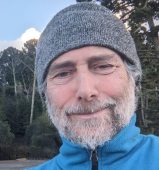
Lincoln Stoller
Counsellor/Therapist, PhD, CHt, CCPCP
If you have read these descriptions, then you will appreciate I focus on solutions and not symptoms. I feel all symptoms relate to a problem that has a solution. It is only in the rare situation where your problem is out of your control, that I will grudgingly admit you may be struggling with an internal dysfunction. But even in that case, I look toward the mind and body's natural healing abilities to regain balance and control.
Trauma and PTSD should be considered as two parts to the same thing. Trauma may be acute and PTSD may be chronic, but any acute trauma will leave post traumatic scars if it is not resolved in the present. We all have post traumatic scars from traumas we've ignored. We have grown around these in the way that a tree's trunk grows around barbed wire. And like the wire and the tree, these may seem minor at the time we encounter them. Small traumas embed themselves when we fail to resolve their pernicious effect. Many disturbing childhood experiences are of this sort.
Acute trauma needs to be reframed quickly. It's like a breached birth; an event that's stuck in the birth canal. It needs to be rotated and its truth released. All trauma has a truth which may or may not be part of you. Acute trauma can be re-experienced, but it does not have to be re-experienced literally or accurately. Such trauma is most effectively re-experienced in a dream-like manner because in dreams, unlike in waking life, you can build new realities. For this, dreamwork, hypnosis, entheogens (psychedelics), and brain training build resilience and insight. Each of these are a tool, not a pill, palliative, or solution. They are part of a healing program.
To deal with PTSD, building resilience and revising memories is important, but your thoughts also play a role. Talking helps when it's cathartic. Aim to recreate the situation without being the center of it. Watch it from a safe distance. You do this in spirit.
You are a survivor and a victim, but also a perpetrator. This is important: in some sense you put yourself in this situation and you have gained a unique experience where others have not lived to tell the tale. Somewhere in your history you made decisions that brought you to these ends. If you are not to blame, then you can examine your decisions and reframe your thoughts for the future. If you are to blame, then the lesson is easy: don't do this again! This may result in your feeling fearful, regretful, paranoid, angry, or guilty. You can use all of those feeling to your advantage because they are yours to create, direct, evaluate, accept, or reject, but first you must feel them. It is for this that you most need a protector who understands the process.
I play the role of the protector, but I will not be comfortable in guiding you into territories in which I sense you are in danger. Dealing with trauma with the help of a counselor requires both trust and a shared foundation. The effective counselor will be a role model and an ally. We venture to confront your dragons, and these dragons are real. I accompany you in the reconstructed experience. Much like a shaman, I present you with a mirror in which to see your true self as a warrior, fool, survivor, and hero.
21 Years Experience
Online in Charlottetown,

PTSD/Trauma
Marjan Emami
Counsellor/Therapist, MD, RTC #3608, MPCC-Provisional #4797, ACTA #3122
Trauma often shows up in many areas of life. While PTSD is a clinical diagnosis, trauma is the underlying cause. Healing involves approaching your pain with compassionate curiosity, reconnecting with the body, and challenging the false beliefs formed during the traumatic experience. Because we are hurt in relationships, much of the healing happens through safe, therapeutic connection, and together we will develop new ways of relating, coping, and moving forward.
2 Years Experience
Online in Charlottetown, (Online Only)
Trauma and PTSD therapists in Charlottetown, Prince Edward Island Statistics
Trauma and PTSD therapists in Charlottetown, Prince Edward Island average 11 years of experience and charge around $162 per session. 100% offer online sessions. The top treatment approaches are Cognitive Behavioral Therapy (CBT) (60%), Internal Family Systems (IFS) (57%), and Existential / Humanistic Therapy (52%).
Average years in practice
11 Years Experience
Average cost per session
$162
Accept insurance
74%
Offer sliding scale
60%
Gender ID
| 72% |
Female |
|
| 24% |
Male |
|
| 2% |
Gender Fluid |
|
| 2% |
Non-Binary |
|
Session Type
| 64% |
In Person and Online |
|
| 36% |
Online Only |
|
Top Treatment Approaches
| 60% | Cognitive Behavioral Therapy (CBT) |
| 57% | Internal Family Systems (IFS) |
| 52% | Existential / Humanistic Therapy |
| 48% | Person-Centered Therapy (Rogerian) |
| 48% | Somatic Therapy |
| 40% | Psychoeducational Therapy |
| 38% | Emotionally Focused Therapy (EFT) |
Ages Served
| 100% | Adult |
| 81% | Young Adult |
| 64% | Senior |
| 55% | Teen |
| 17% | Children |
Client Focus
| 57% | Women |
| 52% | Men |
| 48% | LGBTQ+ |
| 45% | Persons with Disabilities |
| 38% | Buddhist |