Skip to content

Trauma and PTSD therapists in Newton Mearns, Scotland, UK

Find experienced trauma and PTSD therapists in Newton Mearns who provide testing, evidence-based treatment for trauma, post-traumatic stress disorder, and related challenges such as anxiety, depression, and stress. Compare detailed therapist profiles and connect with a provider that’s right for you.

FILTER RESULTS
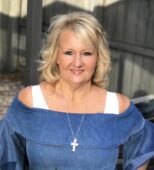
Bristol, England therapist: Samantha Coleman, therapist
Trauma and PTSD

Samantha Coleman

Therapist, MBACP Prof Dip
Trauma can affect how you feel in your body, how safe the world seems, how you relate to other people, and how you see yourself. You may experience flashbacks, anxiety, emotional overwhelm, numbness, hypervigilance, shame, or patterns that feel hard to control or explain. My approach is trauma-informed, gentle, and grounded in helping you feel safe enough to explore things at your own pace. I am interested not only in what happened to you, but in how those experiences have shaped your inner world, your relationships, and the patterns that may still be affecting your life now.  
13 Years Experience
Online in Newton Mearns, Scotland
Isle of Islay, Scotland therapist: Dr. Birte Nachtwey, registered psychotherapist
Trauma and PTSD

Dr. Birte Nachtwey

Registered Psychotherapist, MD, CORST
Trauma and PTSD are more common than many people think. Terrifying events like accidents or war can cause this. Sexual or emotional abuse are a common causes. It can be a single event or something ongoing over many years to the point that is feels like a normality in which you are trapped. Many victims feel guilt and shame. Some memories are completely blanked out by the brain for many years and come back suddenly, triggered by something, or slowly, sometimes in caareful therapy. Symptoms can be dissociation (part of you goes away), flashbacks (intrusive memories),repeated nightmares, numbness and/or increased anxiety, avoidance (f.ex. of sex, relationships), negative thoughts and moods and altered physical and emotional reactions and behavior.. If you have encountered this and think you may be affected please get help. It is understandable that you don’t feel like dealing with it and want to just push it aside and have nothing to do with it ever again, but if this hasn’t worked too well and it burdens areas of your life like your sex life and your relationship, it is advisable to address this in therapy. You can get help and heal.  
19 Years Experience
Online in Newton Mearns, Scotland
Chamonix, Auvergne-Rhône-Alpes therapist: Sara Aicart-Pendlebury, art therapist
Trauma and PTSD

Sara Aicart-Pendlebury

Art Therapist, Human Givens Practitioner (HG.Dip.P), Member of Human Givens Institute, IFS therapist Levels 1&2, Narm Practitioner
PHOBIAS, PANIC ATTACKS AND POST-TRAUMATIC STRESS The brain has an emotional alarm system designed to keep us safe. When people suffer from panic attacks, phobias or post-traumatic stress, it is because the system has gone into overdrive. What happens is this. There is a small, structure in the brain, known as the amygdala (Greek for almond, which is its shape), that has access to our emotional memories and learned responses. It evolved in the distant past and its job is to match new circumstances to what is already in the store and alert us to anything that previously represented a risk and might do so again. In the distant past, this might have been a movement or flash of colour that could have signified an approaching predator. The amygdala would then have triggered changes to help the body get ready to fight or flee the danger – pounding heart, racing pulse, quick, shallow breathing, etc. Now imagine this. A young woman, who has had a highly stressful day, is waiting in a long supermarket queue, worrying whether she’ll be out of the shop in time to catch the bus to school to collect her little girl. It is one pressure too many. The amygdala responds as if she is under threat and she starts to feel her heart pounding strangely and her breathing quickens. She becomes terrified that she is having a heart attack and that makes the symptoms escalate – her palms sweat; her chest feels as if it is bursting and she struggles to breathe. Soon she feels overwhelmed and may collapse or run out of the shop. The amygdala, fearful that this could happen again, files away the fact that there were bright lights and lots of people queuing when the ‘threat’ occurred. Then, when the woman is queuing in the post office the next day, the bright lights and queue may be sufficient for the over-vigilant amygdala to trigger another panic attack to deal with the new ‘threat’. Phobias start the same way – the amygdala makes associations with what was going on when a person first felt threatened, not all of which may be relevant. So, while it is understandable that someone who is attacked by a vicious dog may well develop a fear of dogs generally, it could equally be the case that someone develops a fear of broken glass because, on a previous occasion, when they had had a panic attack, there was broken glass lying near to where they collapsed. Agoraphobia develops when someone is too frightened of panic attacks even to leave the house. In the case of post-traumatic stress, someone who was in the back seat of a car when a collision occurred may find it frightening to travel in the back seat again but there may be other, unconscious, connections with the accident too, such as the smell of petrol. So the person may experience seemingly inexplicable panic when filling up their own car with petrol. Fortunately, human givens practitioners are taught a simple and effective way to deal with all these circumstances. If a traumatic memory is causing panic attacks, phobias or post-traumatic stress, they can use a powerful, painless visualisation procedure, known as the rewind technique, to take the emotion out of the memory and enable the memory of the event to be stored away as history, instead of as one that continues to intrude on the present. The memory remains, and always will remain, a deeply unpleasant one but no longer is it emotionally arousing. This method can work swiftly and reliably even in the most extreme of cases.  
17 Years Experience
Online in Newton Mearns, Scotland

Nottingham, England therapist: Fiona Corbett, registered psychotherapist
Trauma and PTSD

Fiona Corbett

Registered Psychotherapist, Higher Diploma Psychodynamic Psychotherapy, Diploma Humanistic Counselling, EMDR Consultant
EMDR is a NICE recommended treatment for Trauma and PTSD and I offer this wonderful therapy which has a positive impact.Using eye movements or tapping we reprocess the trauma to create less emotional charge and to create new responses to the event.Get in touch to find out more or book a free initial meeting.  
18 Years Experience
Online in Newton Mearns, Scotland
Morden, England  therapist: Adrian Sonnex, Wellbeing Hypnotherapy & Mindfulness, therapist
Trauma and PTSD

Adrian Sonnex, Wellbeing Hypnotherapy & Mindfulness

Therapist, DCH, DHP, MCH, MBCT, SQHP
We specialise in a trauma therapy using a method called Traumatic Incident Reduction. this is an effective treatment for Post Traumatic Stress Disorder (PTSD), and all other forms of trauma. It is a very fast - sometimes only taking one session for a single traumatic episode.  
19 Years Experience
Online in Newton Mearns, Scotland

Trauma and PTSD therapists in Newton Mearns, Scotland, United Kingdom Statistics

Trauma and PTSD therapists in Newton Mearns, Scotland, United Kingdom average 16 years of experience and charge around ¤127 per session. 100% offer online sessions. The top treatment approaches are Integrative Therapy (59%), Person-Centered Therapy (Rogerian) (53%), and Cognitive Behavioral Therapy (CBT) (52%).

Average years in practice

16 Years Experience

Average cost per session

¤127

Accept insurance

44%

Offer sliding scale

49%

Gender ID

70% Female
26% Male
2% Non-Binary
2% Gender Fluid

Session Type

67% In Person and Online
33% Online Only

Top Treatment Approaches

59% Integrative Therapy
53% Person-Centered Therapy (Rogerian)
52% Cognitive Behavioral Therapy (CBT)
39% Somatic Therapy
37% Behavioral Therapy
36% Existential / Humanistic Therapy
35% Solution-Focused Brief Therapy (SFBT)

Ages Served

96% Adult
57% Senior
57% Young Adult
53% Teen
24% Children

Client Focus

64% Women
48% Men
45% LGBTQ+
37% Persons with Disabilities
35% Christian