Autism therapists in Queens, NY
Find experienced Autism therapists in Queens, New York who provide Autism testing, evaluations, and therapy. Our directory features detailed therapist profiles so you can compare qualifications, specialties, and treatment approaches to find the provider that’s right for you.

Autism
Julien Moe
Hypnotherapist, Diploma in Clinical and Applied Hypnosis, Diploma in Life Coaching
Autism and Aspergers can be treated by my Dicit hypnotherapy. Patients with this disorder are getting resilient in no time in my care. While autism cannot be "cured" or "treated" in the sense of making it go away, hypnotherapy is increasingly recognized as a valuable supplemental tool for managing specific symptoms and challenges associated with the condition.
10 Years Experience
In-Person in Queens, NY 11374
Online in Queens, NY

Autism
Steven Merino
Licensed Mental Health Counselor, LMHC
I offer a respectful, compassionate space tailored to support individuals with Autism and Asperger’s. Understanding that each person’s experience is unique, I work collaboratively to honor your strengths and challenges. Together, we’ll explore strategies that fit your needs, promote self-awareness, and enhance your well-being—all at a pace that feels right for you. My goal is to empower you in navigating life’s demands with confidence and authenticity.
2 Years Experience
Online in Queens, NY (Online Only)

Autism
Long Island Therapy Center ( Mind At Ease): Division of Early Focus Therapies, Inc.
Counselor/Therapist, LMHC
As a trained School Psychologist and Early Childhood Evaluator and Specialist, Chantal brings insights and problem solving skills in helping children with autism.
32 Years Experience
In-Person Near Queens, NY
Online in Queens, NY

Autism
Stephanie Miodus
Psychologist, PhD, NCSP
I have extensive expertise working with children, adolescents, and adults diagnosed with autism. My approach includes comprehensive autism evaluations using evidence-based tools like the ADOS-2, while also incorporating assessment tools designed to address the unique diagnostic needs of girls, women, and adults. I have specialized training in the Early Start Denver Model (ESDM)—a developmental, play-based behavioral therapy for young children with autism—and hold PEERS® certification from the UCLA PEERS® Clinic, focusing on social skills training. In addition to diagnostic assessments, I provide personalized therapy to address co-occurring mental health challenges commonly experienced by autistic individuals. I collaborate closely with parents to build strategies for improving skills and addressing challenges at home. My expertise in autism-focused therapy and the mental health needs of autistic individuals has been recognized at national platforms, including presentations at the American Psychological Association Convention and Kennedy Krieger Institute.
2 Years Experience
In-Person Near Queens, NY
Online in Queens, NY

Autism
Jessica Corea Private Practice
Counselor/Therapist, LMHC
We have several practitioners who specialize in Autism at the practice.
14 Years Experience
In-Person Near Queens, NY
Online in Queens, NY

Autism
Emilia Eva Mikrut
Psychologist, Ph.D.
I am a neurodivergent-affirming psychotherapist with several years of experience working with adult Autistic clients. I typically see folks who identity as Level 1 or low-support-needs ASD, as well as ADHD and other forms of neurodivergence. In my practice, I often work with Autistic folks on issues such as challenging internalized shame and a a sense of not belonging; building more "real" and affirming social relationships; experimenting with unmasking; managing overstimulation, sensory needs, and burnout; and relieving mood and anxiety symptoms. My goal is try to help clients navigate the innate tensions between embracing Autistic authenticity while safely living in a world largely built for neurotypicals. On a personal level, I feel called to this work in part due to my own experiences with neurodivergence.
3 Years Experience
In-Person Near Queens, NY

Autism
Marisa Berwald
Licensed Clinical Social Worker, LCSW, PhD
I am a psychoanalyst and licensed clinical social worker, with over 15 years of experience and training in psychodynamic/psychoanalytic approaches to talk therapy. In my practice, I work with people across age groups, with families, couples, and children, with the goal of discovering the desires, dreams, needs that lie behind the more difficult aspects of life. I have two New York City based office locations, making it easy to find a place thats right for you. I work on a sliding scale fee basis and with insurance.
14 Years Experience
In-Person Near Queens, NY
Online in Queens, NY

Autism
MERLYN HURD PHD QEEG D
Psychologist, PHD; QEEG D BCB, BCN
Many clients diagnosed with Autism and Asperger's have been helped to develop language, comprehension and social skills.
40 Years Experience
In-Person Near Queens, NY
Online in Queens, NY
Autism
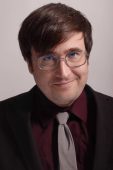
Peter Linden
Licensed Clinical Social Worker, LCSW, Certified Gestalt Therapist
The medical model defines autism by what is supposedly lacking across all domains of existence. We cannot be empathetic, creative, imaginative, curious, aware, loving, connected, or attuned to other people. Our movements, gestures, special interests, need for certainty and concrete communication, and adaptations to overstimulating environments are used to define and control us. Through this paradigm, the autistic person is replaced by a persona seeking integration into a world that demands robotic subservience, only to encounter rejection, scorn, vitriol, and hate.
Autistic suffering is treated as evidence that autism itself requires “fixing.” Sensory overload-induced shutdowns and meltdowns, exhaustion, uncertainty, loneliness, sorrow, emptiness, and the need for support do not exist in isolation. Rather, these experiences are part of existence and cannot be ignored. This is where curiosity comes in.
Curiosity involves being with whatever is emergent, rather than endless intellectual and external analysis. Together, we will explore how you experience your body, sensations, flow, interests, connectedness to the earth, other people, time, and spaces in the present moment. Meltdowns and other adaptations are no longer reduced to “behaviors.” They remain a part of your ongoing humanity. Your story never ends. It is eternal.
Healing does not require taking on personas at the expense of your autistic identity. You are you. And I am I. Expectations are returned to the pit of sorrow and replaced with curiosity and love. Finally, I can just be.
3 Years Experience
In-Person Near Queens, NY
Online in Queens, NY

Autism
Sara Fraser
Psychologist, PhD
As we increasingly better understand the range of the autism spectrum, including the various ways that ASD can manifest and be masked, work with ASD clients will work on goals that clients self-determine and at a pace that is affirming and encouraging. Neurodiversity is affirmed in my practice with ASD clients and therapeutic goals will always be collaborative and self-paced.
26 Years Experience
Online in Queens, NY (Online Only)
Autism therapists in Queens, NY Statistics
Autism therapists in Queens, NY average 13 years of experience and charge around $205 per session. 95% offer online sessions. The top treatment approaches are Cognitive Behavioral Therapy (CBT) (65%), Behavioral Therapy (49%), and Dialectical Behavior Therapy (DBT) (43%).
Average years in practice
13 Years Experience
Average cost per session
$205
Accept insurance
49%
Offer sliding scale
46%
Gender ID
| 55% |
Female |
|
| 25% |
Male |
|
| 12% |
Non-Binary |
|
| 8% |
Gender Fluid |
|
Session Type
| 60% |
In Person and Online |
|
| 35% |
Online Only |
|
| 5% |
In Person Only |
|
Top Treatment Approaches
| 65% | Cognitive Behavioral Therapy (CBT) |
| 49% | Behavioral Therapy |
| 43% | Dialectical Behavior Therapy (DBT) |
| 38% | Acceptance & Commitment Therapy (ACT) |
| 35% | Family Systems Therapy |
| 30% | Integrative Therapy |
| 30% | Person-Centered Therapy (Rogerian) |
Ages Served
| 95% | Adult |
| 81% | Young Adult |
| 62% | Teen |
| 46% | Children |
| 43% | Senior |
Client Focus
| 68% | LGBTQ+ |
| 62% | Persons with Disabilities |
| 57% | Women |
| 43% | Men |
| 41% | Hispanic / Latino |