
It’s 9/11, the 25th anniversary, and the airwaves and social media are filled with remembrance. Of the victims. The heroes. The helpers. I sit quietly with my morning tea, sunlight gently streaming through the window, and read the stories of those who were there.
It’s afternoon, and I’m entering the halls of the Québec parliament, passing beneath the words inscribed in stone over its entrance:
Je me souviens. I remember.
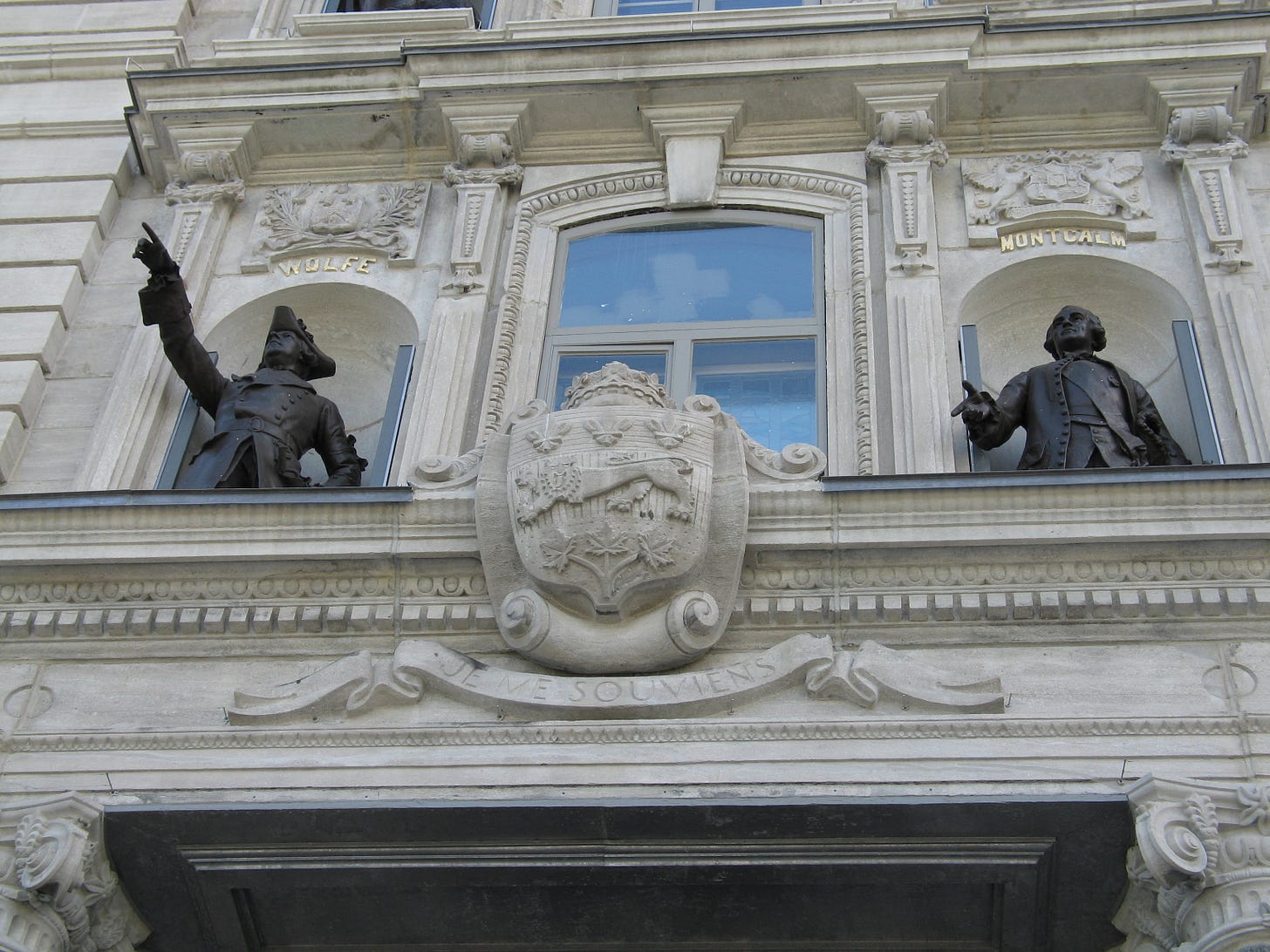
The same official motto is echoed on every license plate driven across the province, a daily call and commitment to remembrance.
Sometimes remembering is a choice. A choice to honor, to hold. To ground ourselves in the truths that shaped us, the losses and horrors and heroism that forged our mettle, the culture and families and faces that nurtured us into being.
I once promised a dying friend I would always speak his name, to keep his memory alive with his young children. Sometimes memory is all we have, painful and potent and precious. Memory becomes legacy.
But sometimes memory is unwanted. Unchosen. It arrives, unbidden; in fact, forbidden. Yet it arrives nonetheless.
We call these experiences intrusive memories. Sometimes, fragments of memory repeat in nightmares, jagged edges of remembrance probing in the creative ink of our subconscious for satisfactory resolution, yet finding none. At their most immersive, intrusive memories become flashbacks—moments when the past intrudes so completely upon our conscious present that it feels as though the traumatic event is happening again.
Flashbacks are one of the hallmarks of trauma; intrusive memories defining symptoms of Post-Traumatic Stress Disorder.
Unlike chosen memory, which is like a book that can be opened and closed at will and filed away on the bookshelf of time, trauma can feel like a picture book that refuses to close, demanding attention, distracting from the present, torturing its victims with repetition of the most harrowing moments of yesterday.
Trauma survivors do not make resolutions to remember. Rather, we may search desperately for an elixir of forgetting.
And here we see the threads connecting trauma to the many ways we try not to feel: the combat veteran who drinks to sleep, the rape survivor who works past exhaustion, the childhood abuse survivor finding relief in the plunge of a needle. What can look from the outside like excess, avoidance, or self-sabotage may sometimes be something more understandable: a desperate attempt to escape what arrives when everything else grows quiet.
But trauma is not healed through forgetting, to the great initial disappointment of some who come to my office seeking help. Rather, as trauma is processed, it changes form, and the book that refused to close transfers its power back to the survivor. Trauma healing provides mastery, provides agency so that you become the one who decides whether the book is open or closed, or stacked neatly on the shelf.
What we run from runs after us. Pay attention! It screams. This matters!
Which it does, of course. But too much remembering all at once in all its sensory forms overwhelms. Within the safety of trauma therapy, we learn to look, and look away, remember, and turn. Bit by bit, piece by piece, remembering becomes an act of agency, rather that an assault from within.
Remembering becomes distinct from reliving.
In the end, healing is not a question of if we remember, but of whether remembering takes away choice. Healing restores a measure of agency over when and where we chose to turn toward the past.
And then, like the Québecois, we too can say, Je me souviens. I remember.
With deliberation.
With sober grounding.
With the freedom of choice to remember, and to shift attention once again.
The past, whether harrowing or proud, shapes us. It becomes part of our story, part of who we are.
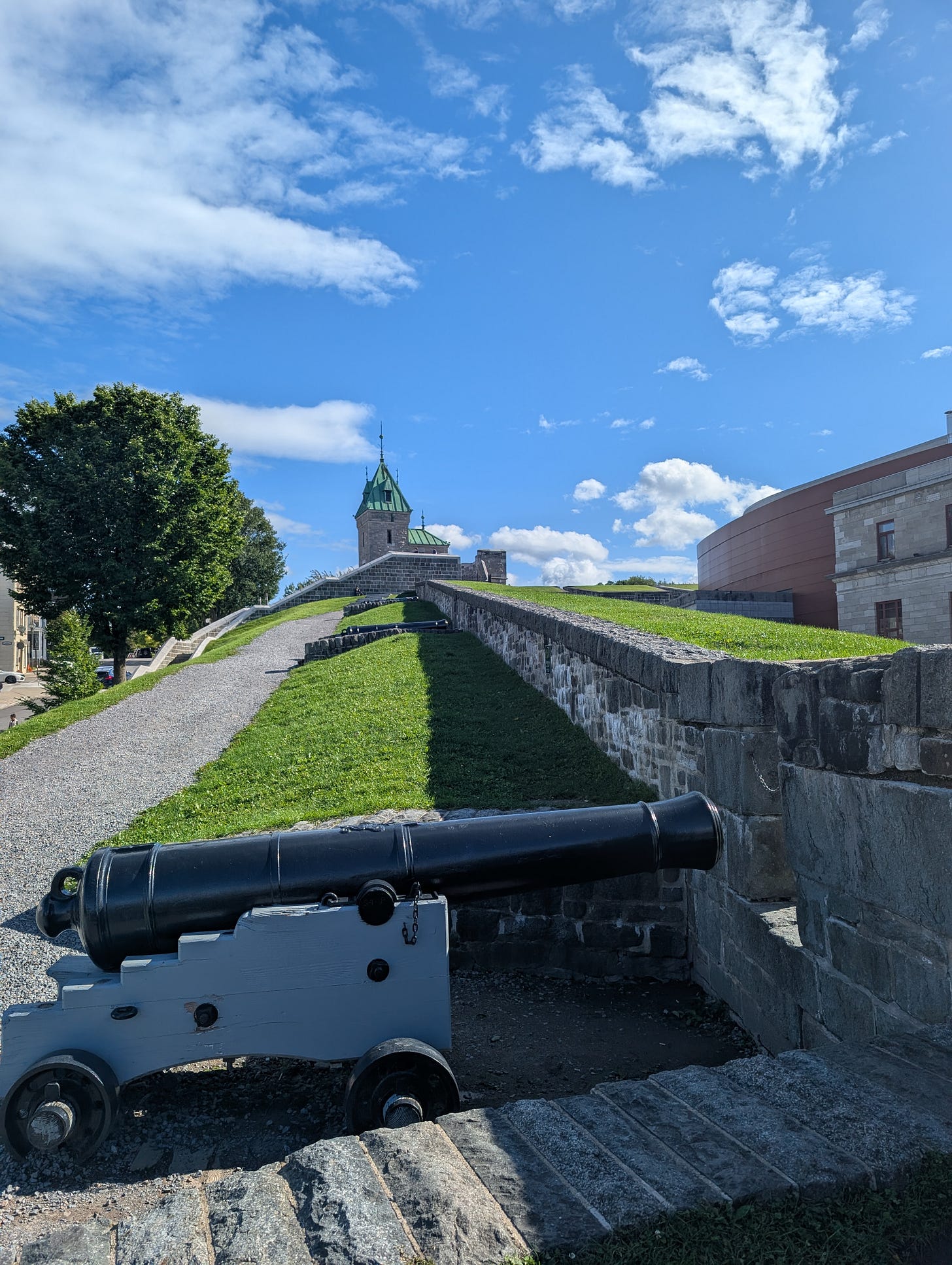
But the Québec City I strolled throughout this week was not bathed in the carnage of wars past. The fortified city walls are covered in grass and lovers picnic upon them. Crowds cheered and waved flags as dozens of Grand Prix Cycliste riders pedaled swiftly through streets, in and out of the ancient citadel and past cannons kept fresh with paint yet stiff with centuries of disuse. The cannons are quiet now, and music from a busker’s harp filters through the cobblestone streets. Children swing on swings and climb on playground bars between ramparts.
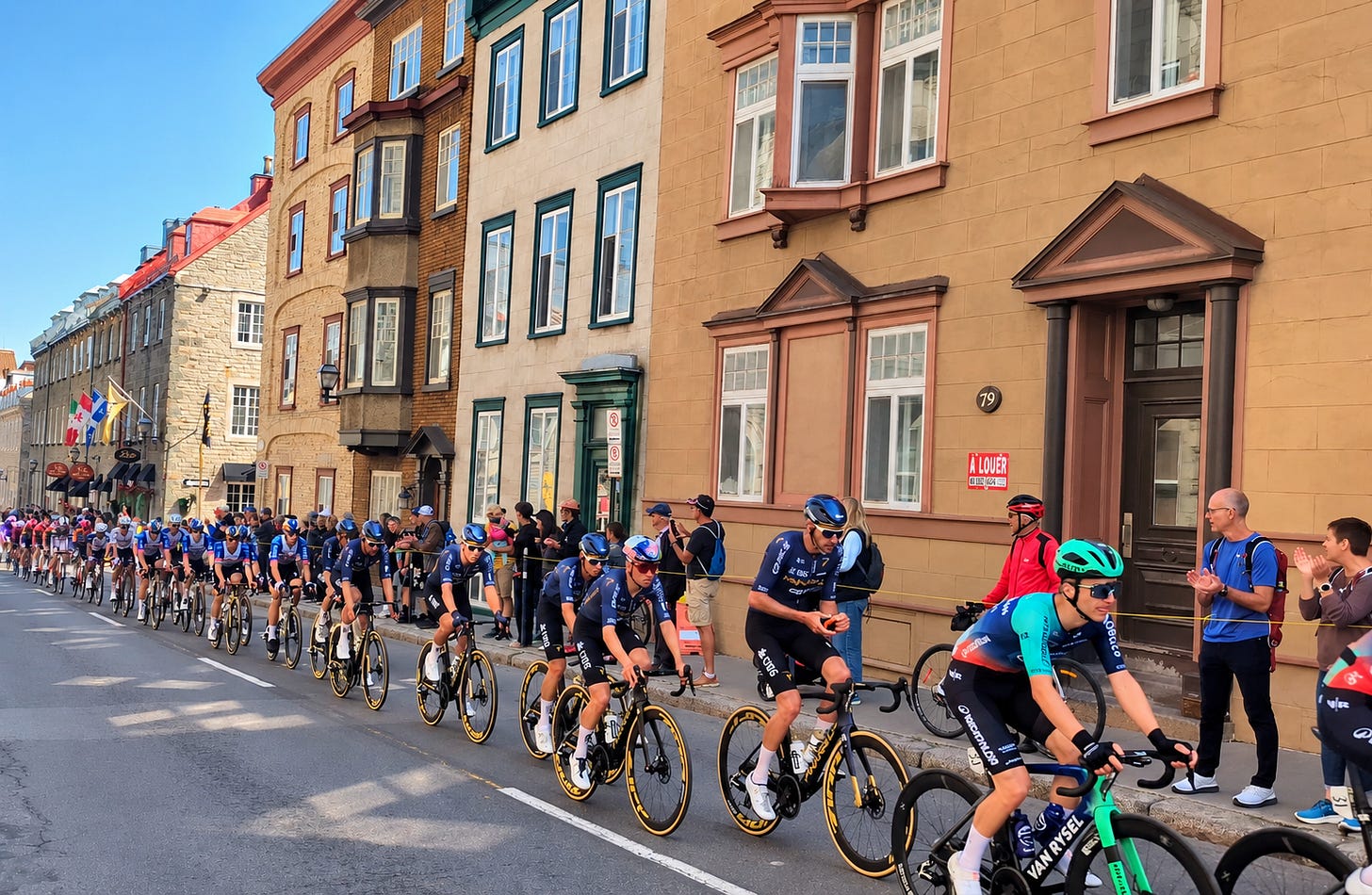
The past remains visible everywhere. But life is happening around it.
Perhaps that, too, is a picture of healing: The past remains, but it no longer dominates the landscape.
Remembrance beyond trauma makes space for growth.
I, too, was once wracked with unbidden memories, intruding on pleasure, transporting me backward – not to the 1600s, nor to September 2001, but to my own adolescence. Taking me captive from the present I was trying to inhabit, standing between me and the love and safety that surround me now.
But bit by bit, healing arrived. Not by happenstance, but through intention and tears and the support of attuned professionals.
And now, I too, can say:
Je me souviens.
I remember.
Not helplessly or suddenly when I’d rather be here and now. Not because the past demands that I return to it. I am no longer captive.
I remember because it is mine.
Because what happened shaped me, but no longer occupies the whole landscape.
I remember.
And I am here.
For more essays like this, join me on Mental Health Musings at dvinall.substack.com