Family Systems Therapy


What Is Family Systems Therapy?
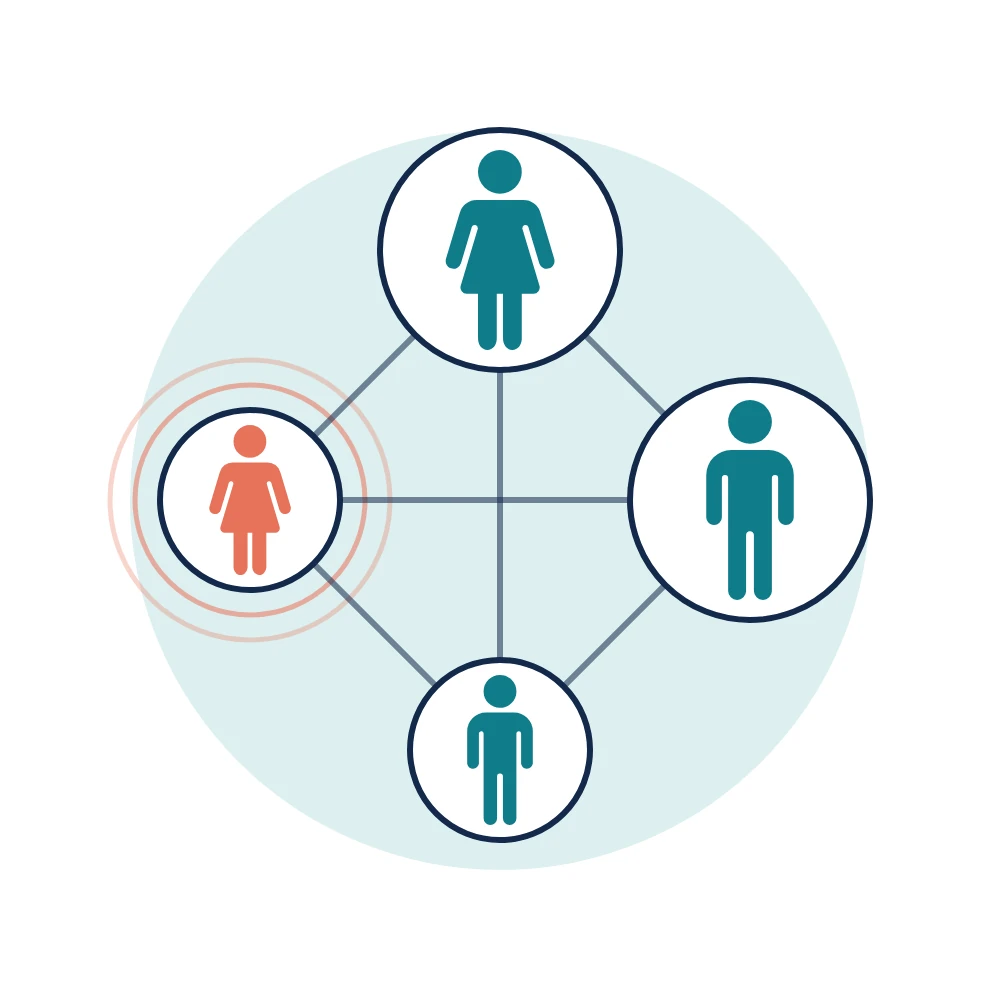
The idea is that a family works like a system. When one person struggles or changes, everyone else feels it and adjusts. Over time, families form patterns, roles and boundaries, and some of those patterns can repeat across generations. Rather than focusing only on the person showing symptoms, family systems therapy works on the patterns between everyone, so the whole family can change together.
Family therapy is most often provided by a licensed marriage and family therapist (MFT or LMFT), though psychologists, clinical social workers and licensed counselors with family systems training also offer it. Marriage and family therapy is systemic: the unit of treatment is the family’s relationships, not just one person (American Association for Marriage and Family Therapy [AAMFT], n.d.).
Family therapists treat both families and couples. If some family members are not available or willing to take part, a therapist may treat the presenting individual alone or with non-familial people who play an important role in their growth and development, such as religious leaders, teachers, close family friends, romantic partners, co-workers, neighbors or coaches.
Note: “Family” can mean biological, adoptive, foster or step-families, partners, and close friends who act like family.
How Does Family Therapy Work?
Family therapy starts from the idea that family members affect one another. When one person changes how they respond, the rest of the family often responds differently too. So instead of asking who is to blame, the therapist looks at patterns: who speaks for whom, how conflict starts and ends, who takes sides, and which roles each person has been handed.
Communication and conflict-resolution skills are big focuses of family therapy. The family may be given roleplay tasks in session and assignments to work on at home. For example, a parent and teen may be given a communication exercise to practice at home, with the expectation that they will share how it went at the next session.
What Does a Family Therapist Do?
A family therapist acts as a neutral guide rather than a judge. The therapist helps each person speak and be heard, points out patterns as they happen, and teaches skills the family can use at home. Common family therapy techniques include:
- Genograms: A family tree that maps relationships and patterns, such as conflict, closeness or addiction, across generations.
- Reframing: Offering a new way to see a problem, for example describing a teen’s anger as a sign of stress rather than disrespect.
- Enactments: Asking family members to act out a typical interaction in session so the therapist can coach them through it differently.
- Communication and problem-solving practice: Rehearsing listening, taking turns and solving a problem together, then practicing at home.
Who Can Benefit from Family Therapy?
Family therapy can help when stress, conflict or a major change affects more than one person at home. Family therapists treat a variety of issues such as:
- Unhealthy relationship patterns, whether romantic, familial or between friends
- Communication, conflict-resolution, and unhealthy coping issues
- Financial/debt issues that are negatively affecting the couple/family
- Sexual dysfunction, disorders, and issues that may be affecting physical and/or emotional intimacy within a marriage or romantic relationship
- Parenting challenges
- Substance and other addictions, such as gambling, that may be damaging a relationship or the family unit
- Anger management or difficulty expressing anger and frustration in healthy ways
- Infidelity and divorce
- Grief after the death of a family member (see also grief counseling)
- A child’s or teen’s emotional or behavior concerns, often alongside child counseling
- A family member’s mental health condition or chronic illness
- Adjusting to a blended family, a move or another major change
Family therapy can also teach family members how to handle adversity before it begins. For instance, newly blended families that include children from previous relationships may benefit from family therapy, because family therapists can help everyone learn how to respect one another and live peacefully together.
Parenting is hard work and can involve a host of confusing and conflicting emotions, along with changes within the family. A marriage and family therapist can help parents talk through parenting issues while learning skills for a healthy, supportive relationship as a parent and partner.
Adults who grew up in dysfunctional or poorly functioning families may benefit from individual therapy, family therapy or both, especially as they begin to date, marry and form their own families.
Family Systems Therapy Techniques and Types
Family therapists use a wide variety of techniques, methods, and approaches to treat struggling families. Four of the best-known types are structural, strategic, Bowen family systems and narrative family therapy, and most family therapists blend techniques from several. See our full list of types of therapy.
Structural Family Therapy
Structural Therapy is a form of family therapy that (1) evaluates the power dynamics within the family, and (2) explores each family member’s allocated “role” within that family unit.
Once the family therapist has a good idea of how the family functions, they help the family redistribute the power structure in the family, so each member is an equal contributor to its function and well-being. The goal of Structural Therapy is to provide the necessary tools to the family so that each person feels empowered and respected.
Structural family therapy was developed by Salvador Minuchin. It often uses enactments and works on clearer boundaries, for example making sure parents are working as a team rather than one parent siding with a child.
Strategic Family Therapy
Strategic family therapy, associated with Jay Haley and Cloé Madanes, is brief and focused on one specific problem. The therapist designs tasks, called directives, for the family to carry out between sessions so the pattern keeping the problem going is interrupted. Reframing is a key technique. Brief Strategic Family Therapy is a structured version used with teens who have behavior or substance use problems.
Milan Therapy
Milan therapy looks at the beliefs, rituals and unspoken rules a family shares, and questions the ones that cause conflict.
Bowen Family Systems Therapy
Bowen family systems therapy, developed by psychiatrist Murray Bowen, is the model most people mean when they say “family systems therapy.” It views the family as one emotional unit, so anxiety or conflict in one relationship spreads to others. Bowen theory rests on eight concepts: triangles, differentiation of self, nuclear family emotional process, family projection process, multigenerational transmission process, emotional cutoff, sibling position and societal emotional process (Bowen Center for the Study of the Family, n.d.). Four of them come up most often in therapy:
- Differentiation of self: The ability to stay emotionally connected to family while thinking and acting for yourself. Research links higher differentiation with better psychological health and relationship quality (Calatrava et al., 2022).
- Triangles: When tension between two people rises, they pull in a third person, such as a child caught between parents.
- Multigenerational transmission process: Ways of handling closeness, conflict and stress are passed down from one generation to the next.
- Emotional cutoff: Managing unresolved family tension by cutting off contact, which can ease stress in the short term but leaves the issues unresolved.
A common Bowen technique is the genogram, which maps family relationships and patterns across at least three generations. The therapist usually stays calm and neutral, coaching each person to notice their own part in family patterns rather than blaming others.
Solution-Focused Family Therapy
Solution-focused family therapy helps families learn from what has actually worked to resolve problems in the past, so they can repeat what worked and avoid what didn’t. The focus is on building solutions rather than analyzing the problem.
Behavioral Family Therapy
Behavioral family therapy uses positive reinforcement to build the behaviors a family wants more of, such as calmer communication, and focuses on the present rather than the past.
Narrative Family Therapy
Narrative therapy, developed by Michael White and David Epston, helps families separate the person from the problem. Instead of seeing one member as “the problem child,” the family describes the problem as something outside of them that they can push back against together, and they build a new story about who they are.
Family-Focused Therapy
Family-focused therapy was developed by David Miklowitz to help people with bipolar disorder and their families. It is a time-limited treatment made up of education about the condition, communication training and problem-solving skills. In a randomized trial of 127 young people at high risk for bipolar disorder, those whose families received family-focused therapy went longer between mood episodes, mainly depressive episodes, than those in a briefer comparison program (Miklowitz et al., 2020).
Functional Family Therapy and Multisystemic Therapy
These two structured programs were built for teens with serious behavior problems, delinquency or substance misuse. Functional family therapy is a short-term, phased model delivered in the clinic or at home. A meta-analysis found it worked better than no treatment and better than several alternative treatments (Hartnett et al., 2017). Multisystemic therapy is more intensive and works with the family, school and community, often in the home. Its results are more mixed: a 2021 review found possible gains in parent and family outcomes, with effects that varied by country (Littell et al., 2021).
Family Systems Therapy vs. Internal Family Systems (IFS)
Despite the similar name, internal family systems (IFS) therapy is a different approach. IFS is usually an individual therapy that works with the different “parts” of one person’s inner world. Family systems therapy works with the relationships between family members.
What Happens in a Family Therapy Session?
All family therapists share one focus: rebuilding, strengthening, and improving the family unit as a whole. Therefore, the way a therapist treats the family depends on the issues it is having and the goals it would like to see accomplished.
Some or all of the following steps may take place during a first family therapy session:
Before the first appointment, each adult usually fills out intake forms about health history, current concerns and contact details. If that isn’t possible, an intake specialist may go over the forms by phone.
The therapist will usually start with introductions and easy conversation so everyone feels comfortable, then ask each person, one at a time, what brought the family to therapy and what they hope will change.
Each person will be able to share their thoughts without interruption. If interruptions occur, the therapist will intervene and ask others to hold their thoughts and opinions until later. During this process, the therapist may take notes, or record the session only with everyone’s written permission, so that they can properly address any issues and develop a proper treatment plan for the family.
After everyone has shared, the therapist will explain how therapy works, how long it may last and the goals you will work on, and may give the family a short assignment for the next session. They will also explain confidentiality and consent in a way everyone can understand, and that anyone can stop a session or end therapy at any time.
When a teen or parent is reluctant, the therapist usually acknowledges that coming to therapy can feel uncomfortable, invites them to share only what they are ready to share, and checks in with them directly so their view is heard alongside everyone else’s.
Throughout, the therapist watches how family members interact, the roles each person plays and the family’s strengths, so the work looks at the family’s background and patterns, not just the presenting problem.
After the first session, the therapist may request to see the various family sub-units separately for a few sessions, such as parents, siblings, children or grandparents on their own. This helps the therapist get a full picture of what is happening in the family.
After the First Session
After the first session, evaluate whether the therapist is right for your family. Consider whether anyone felt unfairly blamed, whether the therapist seemed competent, fair and compassionate, whether the process was explained clearly, and whether everyone feels hopeful about working with this therapist. If so, keep going. If not, keep searching.
Family Therapy vs. Couples Counseling
Marriage counseling, couples therapy and marriage and family therapy are all types of psychotherapy that focus on improving communication and conflict-resolution skills. Family therapy tends to be more involved than marriage counseling, because it takes a more holistic approach and includes all family members in the therapy process.
If the main concern is the relationship between two partners, marriage counseling is usually the better starting point. Many MFTs offer both, and a therapist may move between couples and family sessions as needs change.
Does Family Therapy Work?
Research supports family therapy for many families and many problems. A meta-analysis of 56 randomized trials found that systemic therapy improved young people’s mental health compared with no treatment, and did somewhat better than other treatments at both the end of therapy and follow-up (Riedinger et al., 2017). Broad reviews support family therapy for children and teens with conduct, emotional, eating and somatic problems, and for adults with mood and anxiety disorders, alcohol problems, psychosis and chronic illness (Carr, 2019a, 2019b). Results depend on the family, the problem and the fit with the therapist.
Benefits of Family Therapy
Families often notice benefits such as:
- Better communication: Family members learn to listen, take turns and say what they need without blaming.
- Less conflict: The family learns healthier ways to solve problems and repair after arguments.
- Support through change: Divorce, a new baby, a move, illness or a death can be easier to handle together.
- Shared understanding: When one person has a mental health condition, family sessions help everyone understand it and know how to help.
The better a family functions, the lower the stress level and the better the health of the entire family.
When Is Family Therapy Not Recommended?
Family therapy is not the right fit in every situation. Joint family sessions are usually not recommended when:
- There is ongoing abuse or violence: If one family member is hurting, threatening or controlling another, joint sessions with that person can put the person being harmed at risk, because what is said in therapy may be used against them later (National Domestic Violence Hotline, 2022). Individual support and safety planning come first.
- Someone is in immediate danger: A family member at risk of suicide or of harming others needs crisis care first. See the crisis resources below.
- Someone is pressured to attend: Family therapy depends on each person being able to speak honestly. A family member who is coerced into sessions, or afraid to speak, may not be safe to take part.
In these situations, the therapist may recommend individual therapy first, or a mix of individual and family sessions once everyone is safe.
How to Find a Family Therapist
Search for a qualified family therapist with in-depth experience in family counseling. Check each therapist’s references, education and experience, then schedule a consultation. You may want to meet with several therapists before settling on one. It is important that all family members feel comfortable with the therapist, because trust is essential for success.
Look for a licensed marriage and family therapist (LMFT or MFT), or another licensed mental health professional with family systems training. Membership in the American Association for Marriage and Family Therapy (AAMFT) is another sign of specialized training. You can search the TherapyTribe directory for family therapists near you or online, or use Get Matched to see therapists who fit your family’s needs. For questions to ask, see how to choose a therapist.
Family Therapy FAQs
How long does family therapy take?
It is usually short term. AAMFT reports that family therapy averages about 9 sessions (AAMFT, n.d.). Families dealing with more complex or long-standing problems may meet for longer.
What if a family member refuses to come?
Therapy can start with whoever is willing. Change in one or two people often shifts the whole family, and a reluctant member may join later. The therapist may also meet with family members individually if some cannot or will not attend.
Does everyone have to attend every session?
No. The therapist may see the whole family for some sessions and one parent, a couple or a child alone for others, depending on what the family is working on.
Can family therapy be done online?
Yes. Many family therapists offer online family therapy, also called online family counseling, through secure video. It can make it easier for busy families, or relatives who live in different cities, to attend together. A few things help: each person needs a private, quiet space; the therapist must be licensed where each family member is located during the session; and in-person care may be a better fit when there are safety concerns at home. You can find family therapists who offer online sessions in the TherapyTribe directory.
How much does family therapy cost?
It varies by location, the therapist’s license and experience, session length and whether insurance is used. Many health plans cover family therapy when it is part of treating a family member’s diagnosed mental health condition, but may not cover it for general family conflict. Check your plan’s mental health benefits and ask the therapist whether they are in network. If cost is a barrier, ask about sliding-scale fees, or look for community mental health centers and university training clinics, which often charge less.
What age do children need to be to join family therapy?
There is no set minimum age. Young children may join part of a session, often through play or drawing, while teens usually take part fully. The therapist will help decide which sessions each child attends.
If you’re in crisis or thinking about suicide, call or text 988 (US and Canada), or see our crisis helplines for other countries.
If someone in your family is hurting, threatening or controlling another family member, joint family sessions are not recommended while the abuse is ongoing (National Domestic Violence Hotline, 2022). Call the National Domestic Violence Hotline at 800-799-7233 or text START to 88788.
Tell us what your family is working on and see family therapists who fit. Get matched with a family therapist
This article is for general information only and is not a substitute for advice from a licensed mental health professional.
Relationship and Marriage Counseling therapists in Top Cities
- Toronto
- Los Angeles
- Calgary
- New York City
- Dallas
- Chicago
- Manhattan
- Ottawa
- San Diego
- Atlanta
- Vancouver
- Seattle
- Mississauga
- Philadelphia
- San Francisco
- Denver
- Houston
- Washington
- Austin
- Ajax
- Sydney
- Oakville
- Edmonton
- Hamilton
- Minneapolis
- Miami
- London
- Oshawa
- San Antonio
- North York
- Markham
- Brooklyn
- Tampa
- Victoria
- Charlotte
- Phoenix
- Nashville
- Montreal
- Beverly Hills
- Pasadena
- Boca Raton
- Burlington
- Fairfax
- London
- Raleigh
- Ann Arbor
- Vaughan
- Long Beach
- Boston
- Melbourne
References
American Association for Marriage and Family Therapy. (n.d.). About marriage and family therapists. AAMFT website
Bowen Center for the Study of the Family. (n.d.). Learn about Bowen theory. https://www.thebowencenter.org/core-concepts-diagrams
Calatrava, M., Martins, M. V., Schweer-Collins, M., Duch-Ceballos, C., & Rodríguez-González, M. (2022). Differentiation of self: A scoping review of Bowen family systems theory’s core construct. Clinical Psychology Review, 91, Article 102101. https://doi.org/10.1016/j.cpr.2021.102101
Carr, A. (2019a). Couple therapy, family therapy and systemic interventions for adult-focused problems: The current evidence base. Journal of Family Therapy, 41(4), 492-536. https://doi.org/10.1111/1467-6427.12225
Carr, A. (2019b). Family therapy and systemic interventions for child-focused problems: The current evidence base. Journal of Family Therapy, 41(2), 153-213. https://doi.org/10.1111/1467-6427.12226
Hartnett, D., Carr, A., Hamilton, E., & O’Reilly, G. (2017). The effectiveness of functional family therapy for adolescent behavioral and substance misuse problems: A meta-analysis. Family Process, 56(3), 607-619. https://doi.org/10.1111/famp.12256
Littell, J. H., Pigott, T. D., Nilsen, K. H., Green, S. J., & Montgomery, O. L. K. (2021). Multisystemic Therapy® for social, emotional, and behavioural problems in youth age 10 to 17: An updated systematic review and meta-analysis. Campbell Systematic Reviews, 17(4), Article e1158. https://doi.org/10.1002/cl2.1158
Miklowitz, D. J., Schneck, C. D., Walshaw, P. D., Singh, M. K., Sullivan, A. E., Suddath, R. L., Forgey Borlik, M., Sugar, C. A., & Chang, K. D. (2020). Effects of family-focused therapy vs enhanced usual care for symptomatic youths at high risk for bipolar disorder: A randomized clinical trial. JAMA Psychiatry, 77(5), 455-463. https://doi.org/10.1001/jamapsychiatry.2019.4520
National Domestic Violence Hotline. (2022, April 14). Should I go to couples therapy with my abusive partner? https://www.thehotline.org/resources/should-i-go-to-couples-therapy-with-my-abusive-partner/
Riedinger, V., Pinquart, M., & Teubert, D. (2017). Effects of systemic therapy on mental health of children and adolescents: A meta-analysis. Journal of Clinical Child & Adolescent Psychology, 46(6), 880-894. https://doi.org/10.1080/15374416.2015.1063427