Social Isolation therapists in Great Falls, MT
Browse Social Isolation therapists in Great Falls, Montana. Compare credentials, specialties and therapeutic approach. Contact a therapist to learn more.

Social Isolation
Dr. Jeff J. Rocker
Licensed Mental Health Counselor, PH.D, NCC, LMHC, LCPC, LPC
Rocker Health has experienced and competent staff to deal with these issues.
15 Years Experience
Online in Great Falls, MT

Social Isolation
Emily Rowe
Psychologist, Psy.D.
Feeling disconnected or isolated can be overwhelming and lonely. I specialize in helping clients who are struggling with social isolation, whether due to anxiety, trauma, or major life changes. Together, we’ll explore the root causes of your isolation and work on building confidence, reconnecting with others, and fostering meaningful relationships. Through evidence-based therapies like CBT and ACT, I’ll support you in breaking the cycle of loneliness and creating a more fulfilling social life.
7 Years Experience
Online in Great Falls, MT
Social Isolation
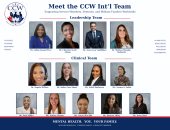
Centers for Counseling and Wellness, Int'l
Psychologist, PhD
Loneliness is one of the quietest forms of suffering. You can be surrounded by people and still feel completely alone. You can have a full life on paper and still feel like nobody really sees you, nobody really knows you, and nobody would notice if you quietly disappeared from the spaces you occupy.
That feeling is more common than you think. And it deserves just as much attention as any other wound.
At CCW International, we see social isolation as both a symptom and a cycle. It often starts with something, a move, a loss, a transition, a season of depression or anxiety, and then it takes on a life of its own. The longer you are disconnected, the harder it feels to reach back out. For our veteran clients, this is especially familiar. Leaving the military means leaving one of the most tight-knit communities in the world, and the civilian world rarely fills that gap in the same way. The isolation that follows can be profound.
For the women we serve, isolation often hides behind busyness. You are doing everything for everyone else, but the meaningful connection you are craving for yourself keeps getting pushed to the back of the line.
We help you understand what is driving the disconnection, gently rebuild your capacity for connection, and find your way back into community, starting with the one you build right here in the therapy room.
You were not meant to do this alone. And you do not have to.
14 Years Experience
Online in Great Falls, MT (Online Only)

Social Isolation
Julien Moe
Hypnotherapist, Diploma in Clinical and Applied Hypnosis, Diploma in Life Coaching
Hhypnotherapy is considered a valuable tool for treating social isolation by addressing underlying causes like low self-esteem, anxiety, and negative thinking. It helps individuals break the cycle of loneliness, build confidence, and foster motivation to make social connections.Key aspects of how hypnotherapy treats social isolation include:Addressing Underlying Issues: Hypnotherapy helps identify and treats root causes of isolation, such as social anxiety, fear of judgment, or past traumatic experiences.Rewiring Thought Patterns: It assists in overcoming negative self-talk, boosting self-esteem, and encouraging a more positive self-image, which can make it easier to reach out to others.Building Social Confidence: Through visualization and mental rehearsal, sessions help patients feel more relaxed and confident in social situations.
Social isolation is undesirable for both physical and mental health. I have been helping individuals with this issue, treating them with Dicit hypnotherapy. All my clients with this issue are getting resilient in no time. It's your turn. Let me help you. Man cannot live alone. Let me train you to be social beyond compare.
10 Years Experience
Online in Great Falls, MT

Social Isolation
Cameron Staley
Psychologist, Ph.D.
We need human connection and yet social isolation is increasingly common. I work to help individuals build the types of connection they want to create a more meaningful life.
14 Years Experience
Online in Great Falls, MT (Online Only)
Social Isolation therapists in Great Falls, MT Statistics
Social Isolation therapists in Great Falls, MT average 16 years of experience and charge around $212 per session. 100% offer online sessions. The top treatment approaches are Cognitive Behavioral Therapy (CBT) (73%), Existential / Humanistic Therapy (47%), and Acceptance & Commitment Therapy (ACT) (45%).
Average years in practice
16 Years Experience
Average cost per session
$212
Accept insurance
35%
Offer sliding scale
37%
Gender ID
| 62% |
Female |
|
| 38% |
Male |
|
Session Type
| 56% |
In Person and Online |
|
| 44% |
Online Only |
|
Top Treatment Approaches
| 73% | Cognitive Behavioral Therapy (CBT) |
| 47% | Existential / Humanistic Therapy |
| 45% | Acceptance & Commitment Therapy (ACT) |
| 45% | Person-Centered Therapy (Rogerian) |
| 35% | Behavioral Therapy |
| 35% | Psychodynamic Therapy |
| 34% | Solution-Focused Brief Therapy (SFBT) |
Ages Served
| 100% | Adult |
| 77% | Young Adult |
| 55% | Senior |
| 40% | Teen |
| 16% | Children |
Client Focus
| 55% | Women |
| 45% | Men |
| 44% | LGBTQ+ |
| 35% | Military / Veterans |
| 32% | Hispanic / Latino |