Online Anxiety therapists in Roehampton, England ENG, United Kingdom UK
We are proud to feature top rated online Anxiety therapists in Roehampton. We encourage you to review each profile to find your best match.
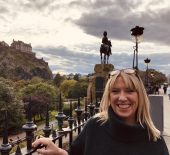
Anxiety
Jayne LESLEY Allen
Therapist, MIBWRT(AC and Coach, TFT DX, NLP Practioner and Coach, Hypnotherapist
Are you avoiding situations due to anxiety? Is it stopping you from living a full life?
Anxiety attacks can produce an unpleasant cocktail of symptoms; sweating palms, nausea, palpatations, hyperventilation and feelings of paranoia. As anxiety is usually triggered by specific circumstances, many people find themselves avoiding those situations where they may experience anxiety, this in itself can exacerbate the problem, especially if those situations involve work, travel or socialising. With cutting edge psychological tools anxiety can be a thing of the past in between 1 and 4 sessions.
16 Years Experience
Online in Roehampton, ENG
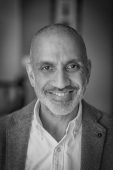
Anxiety
Dipak Jilka - Psychotherapist & Counsellor
Therapist, Psychotherapy & Counselling Federation of Australia (PACFA) – PACFA Reg. Clinical 26570
Anxiety and fear often points to the meaning of something that might happen in the future. It may be the fear of losing your job or a relationship that is struggling. It may be the anxiety from the responsibility that come with living in the modern world and what might feel like no freedom. I believe most often, anxiety is telling you something useful and critical in you life that require exploration. I invite you to come and explore your anxiety with curiosity and what it is trying to tell you. With that awareness, new choices may appear.
6 Years Experience
Online in Roehampton, ENG
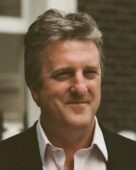
Anxiety
James Darby
Registered Psychotherapist, Postgraduate Diploma Core Process Psychotherapy, DCHyp, ABSCH, MBA
Fully qualified mindfulness teacher who has 15 + specialising in stress and anxiety reduction.
21 Years Experience
Online in Roehampton, ENG

Anxiety
Mariana Amat
Psychologist
I help clients understand the deeper roots of their anxiety and fears, developing a compassionate awareness of the emotions and beliefs that sustain them. Through a blend of evidence-based and experiential approaches, we work to regulate the nervous system, expand tolerance for discomfort, and foster a sense of calm and confidence in daily life.
11 Years Experience
Online in Roehampton, ENG

Anxiety
Valentina Olper
Therapist, MSc
Anxiety is often a messenger from the somatic self signalling a lack of safety. Together, we decode these signals, using psychoanalytic depth and sound therapy to transform chaos into stability. We dissolve the blocks to your peace, allowing you to stand in your intrinsic power.
10 Years Experience
Online in Roehampton, ENG

Anxiety
Rachel Bates
Registered Psychotherapist, M Phil - Counselling & Psychotherapy; M A Psychology
Anxiety is extreme worry or apprehension which is a normal reaction to an extremely stressful situation. However if anxiety is characterised by physical changes such as increased blood pressure or rapid heart beat or recurring intrusive fearful thoughts or concerns it can lead to serious mental health issues.
21 Years Experience
Online in Roehampton, ENG
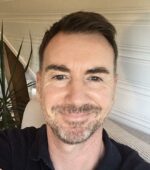
Anxiety
Daniel Dennehy Counselling
Counsellor/Therapist, BA, Dip Grad, AdvDip, MBACP
Counselling provides a space for you to explore your experiences and feelings in a respectful and confidential space. The focus of the conversation is to understand your experience and provide support to explore the ways in which you can introduce change into your life.
8 Years Experience
Online in Roehampton, ENG

Anxiety
Anjali P.
Registered Psychotherapist, MA in Person-Centred Experiential Counselling, Registered Member MBACP- 408062
Anxiety can show up in many different ways, from persistent worry and overthinking to panic, self-doubt, difficulty relaxing, or a constant sense of being on edge. While anxiety can feel overwhelming, it often develops for understandable reasons and may be connected to past experiences, relationships, responsibilities, or ways of coping that have become stretched beyond their limits. Together, we can explore what may be contributing to your anxiety, develop a deeper understanding of your emotional experience, and build practical ways of responding that support greater confidence, calm, and self-trust.
4 Years Experience
Online in Roehampton, ENG (Online Only)

Anxiety
Valerie Fearon
Licensed Professional Counsellor, CBT, Mindfulness, Counselling, Inner Child Truma
Helping clients to deal with Anxiety and fears, by talking to them asking them to talk about the problems that they are working about. Using calming breathing exercises, and work to identify meaning and purpose in their life. And shift their focus to positive emotions in their daily life.
11 Years Experience
Online in Roehampton, ENG
Anxiety
Aleksei Panov
Registered Psychotherapist, MA Psy, MS Psy, RP
For dealing with anxiety, first of all, I help my clients to manage their physical symptoms of anxiety and then they are able to take control of their bodies, secondly we try to identify automatic negative thoughts and learn how to deal with them and challenge them. It is okay to have anxiety, but you need to learn how to deal with it faster.
17 Years Experience
Online in Roehampton, ENG

Anxiety
Liam West
Registered Psychotherapist, MA, Adv Dip MBACP
People struggle with anixety and fear due to unconscious processes in the brain. In looking at the underlying issues people are struggling with can we affect change to peoples overall sense of wellbeing and alleviate any anxiety.
13 Years Experience
Online in Roehampton, ENG (Online Only)
Anxiety
John Castleford
Registered Psychotherapist, MA, MIAEB, FRAI
FEAR! The strongest of ALL emotions. Paradoxically it's been fundamental to our evolutionary success: particularly fleeing predators and other sources of harm. It's kept us alive for the 200,000 years of our existence as humans. We're not all that strong, we don't have claws and fangs --but we can run long distances! And it matters not one bit that our fear of that growl in the undergrowth may be unfounded. We can get that wrong 1000 times and if we flee we survive as a consequence.
Just as your smoke alarm has one volume (LOUD!) it's natural to be fearful of what we perceive may harm us. We often overestimate the size and proximity of threats and conversely underestimate our ability to cope. Fear is powerful BUT it can often interfere with logic and reason. That's why we need to respect fear and reassess our relationship to it. And courage is not the absence of fear; mindset is everything and mindset can be developed to ensure we have optimal strategies for the stresses and adversities that regularly afflict us.
18 Years Experience
Online in Roehampton, ENG
Anxiety
Sudeva Hawkes
Registered Psychotherapist, Registered Clinical Counsellor, B.Couns., MNCPS Accred. , PACFA Reg.
Anxiety is essentially rooted in a heightened state of vigilance and tension. We have 'forgotten' how to let go. Here's a simple example. When we cross a busy road or drive a car we need to be extra vigilant and aware of our surroundings. We don't need that same level of attention when sitting comfortably at home, yet somehow it is still there. By bringing this habitual tension into conscious awareness and exploring its origins, we can help your nervous system rediscover how to unwind and embrace life fully.
29 Years Experience
Online in Roehampton, ENG (Online Only)

Anxiety
Marianna Trezza -The Growing mindset
Counsellor/Therapist, MA (Hons), Adv Dip. Counsel. & Psychoth.,Dip. Hypnoth., X-Cultural Adaptation Coun. Reg. BACP 572613
Many women living abroad carry a subtle but constant state of alertness that is often mistaken for “just stress” or anxiety. My work explores the deeper emotional and nervous system patterns underneath chronic overthinking, emotional exhaustion, hyper-vigilance and the pressure to constantly adapt, perform or hold everything together.
23 Years Experience
Online in Roehampton, ENG

Anxiety
Kyle Davies
Psychologist, BSc MPhil CPsychol AFBPsS
For people who have never suffered from anxiety it is almost impossible to describe how debilitating the symptoms can be. It can seem as if there is no escape from the pain and discomfort; it feels like life will be like this forever and that the symptoms can’t be helped.
Conventional approaches to anxiety seek to medicate. Many physicians may tell you that your anxiety is something you just have to live with. Counseling or mainstream psychological approaches may have you manipulate or change your thought patterns, while alternative practices may seek to have you relax or practice mindfulness. While there is value in some of these approaches, most fail to reach that deeper understanding of the underlying cause of anxiety and panic.
Symptoms of anxiety and panic are not the same as emotions of fear – these include worry, nervous, apprehension, concern, etc.
In everyday life we tend to talk about anxiety symptoms and conditions as being the same as emotions of fear, nervousness and worry. This is confusing for the simple reason that anxiety symptoms are not merely amplified fear, even though this can be what they feel like in many instances.
Anxiety is something of an umbrella term that covers quite a wide range of symptoms and experiences. In some instances this symptoms and conditions might relate to emotions of fear but in other instances they do not.
This is why it is entirely possible to rid ourselves of anxiety symptoms whereas we cannot, and should not try to rid ourselves of healthy emotions, because they play a vital feedback role in our day to day experience of life.
These are the anxiety conditions:
- anxious apprehension (worry, rumination)
- generalised anxiety disorder (free floating anxiety)
- Intense anxiety and panic attacks
- obsessive compulsive disorder (OCD)
- phobias of all kinds including agoraphobia and social phobia
- eating disorders
- derealisation
- depersonalisation
There is an enormous amount of scientific evidence to show that various regions of the brain are either over active or dysfunctional when anxiety symptoms are present. One of the most salient issues pertaining to this kind of scientific research is that different types of anxiety symptoms correspond with different areas of brain dysfunction.The forebrain appears to be the area most affected in most anxiety disorders. This is the largest portion of the brain and includes the cerebral hemispheres, the limbic system, the thalamus and hypothalamus, amygdala and the corpus callosum.
Each of the brain hemispheres is divided into four lobes: frontal, parietal, occipital and temporal. Collectively, the forebrain functions to control cognitive, sensory and motor function, regulate temperature, reproductive functions, eating, sleeping and the display of emotions. When it becomes dysfunctional it is evident that the range of symptoms can be enormous.Recent studies using electroencephalographic (EEG) methods have found that patients diagnosed with generalized anxiety disorder and obsessive-compulsive disorder had heightened activity in the left brain regions, whereas patients with panic disorder, panic symptoms or those subjected to high stress situations exhibited enhanced activity in the right hemisphere.
The important lesson from this type of research is that anxiety conditions are not all the same and therefore each case needs to be approached and treated depending on the needs of the individual and the types of symptoms present. However, we must also be mindful that over activity or dysfunction in brain regions is not the cause of anxiety – rather this activity is caused and supported by the 4 core element model outlined below. It is these 4 Anchors that trigger brain dysfunction, and it is only by fully addressing these that a complete cessation of symptoms is achieved.
The first step is to understand the nature, structure and cause of anxiety, and then we can begin to address the cause of the symptoms. Within our culture we use the words ‘anxious’ and ‘anxiety’ to mean both the emotion of fear and a varied and debilitating set of symptoms. This can be extremely confusing since fear, in the form of worry, nervous, scared, or dread, is often very different from the symptoms of anxiety or a panic disorder. I would argue that even though many anxiety symptoms can feel like fear, it’s also the case that many anxiety and panic symptoms do not feel like fear (see Anxiety Symptoms Checklist below). This means that is possible to experience anxiety symptoms without being afraid of anything.
Even though anxiety can be related to the emotion of fear at a deep unconscious level, there are many instances when symptoms of anxiety are present and there is no evidence of the emotion of fear. Most sufferers of anxiety will experience fear about the symptoms; though fear of symptoms is not the cause of symptoms. Fear can exacerbate symptoms and make sufferers of anxietyfeel significantly worse; however it is rarely, if ever, the underlying cause.
So what causes anxiety symptoms? The first step is to embrace the notion that symptoms are feedback from body and brain. Symptoms are not some nasty evil invader trying to make us suffer, they have reason for existing and that reason is to let us know that something is not right, something is blocked and out of balance.
There are Four Core Elements that lock anxiety symptoms in place. When we address these four core elements, we not only banish anxiety symptoms, we open up to the possibility of experiencing ourselves in a whole new way. The 4 core energy-flow model comprises:
- FEAR & AVOIDANCE OF SYMPTOMS. Anxiety is deeply uncomfortable so it can be a natural reaction to avoid situations and events that seem to cause anxiety. Avoidance can lead to more symptoms, so carefully navigating through this is the first step.
- REWIRING THE EMOTIONAL SYSTEM. Our emotion has a massive impact on body and brain. Blockages and imbalances within the emotional system are significant causes and contributors to anxiety conditions as well as a huge range of other chronic health challenges. Yet, our understanding of the nature of emotion and how to effectively process and regulate it remain poor. This element focuses in revealing the true nature of emotion and critically how to connect with it and facilitate a flow.
- WEARING A MASK: As we move through life and seek to get along, fit in, be accepted and do well, we unconsciously block our true nature and end up being more of who we are not than who we are. Anxiety symptoms often tell us when we are covering up who we are, or are disconnected from our authentic core. Reconnecting with our core and removing the shackles of who we used to be takes us a step closer to being anxiety free.
- CONTROL & CREATION: Whether we like it or not, we play a significant role in the creation of our experience of life and reality. However, when shackled with anxiety we feel out of control, restricted as if we have lost our freedom. Learning how to create inner freedom and design our lives is the final piece of the puzzle.
The four core element model uncovers a different perspective on the cause of anxiety conditions and embraces a full understanding of the nature of the human condition. It puts you back in the driver’s seat to return to your natural healthy self. Your natural state is to be connected and happy; all that’s needed is a little guidance to help you find the way back to your default setting.
27 Years Experience
Online in Roehampton, ENG
Anxiety
Empowered Wellbeing, Decolonizing Intersectional and Integrative Complex Trauma & Dissociation Recovery Support
Life Coach, view my credentials online at: www.recoveringfromwithin.com/credentialslongform
From an TIST/EFIT/IPNB/IFS Parts Perspective, clients get to know parts with anxieties and fears and learn how to listen and be with the anxiety, even finding hidden wisdom in these parts. We also offer the Polyvagal Theory based Safe and Sound Protocol (SSP) for clients with more intensive anxiety and fears, particularly social and intimacy fears. Sometimes a functional approach may support clients experiencing anxiety due to physiological stress or epigenetic adaptive stress (e.g. if a basic metabolism or hormonal cycle is not able to complete with ease or there is an injury or chronic health condition that is still being tended to in the body, the brain will likely receive signals of distress that could be read as baseline anxiety, but may be a bodily signal that some part of a basic physiological cycle is not able to function smoothly and may benefit from ascertaining where the challenge is and working with supplemental or integrative support/education/care that is within scope or collaborative scope); please feel free to ask if you have any questions about this.
15 Years Experience
Online in Roehampton, ENG (Online Only)

Anxiety
Dr Grenville Major
Therapist, MBchB, MRCpsych, MSc psychological therapies
Anxiety takes many forms. It can present as OCD, agoraphobia or more commonly as free-floating anxiety. You could view it as your body's way of warning you that there is something amiss. The role in therapy is to discover what it is your body is trying to tell you. Then you can begin to confronted it and become stronger. I would like to meet with you to see what can be done to help you. This will enable us to get to know each other and see if we can work together. It’s important for you to work with someone you trust and feel safe with.
45 Years Experience
Online in Roehampton, ENG

Anxiety
Irene Valis
Registered Psychotherapist, PACFA certified Gestalt therapist, Counsellor, Life Coach
I know first hand how anxiety or unprocessed fears can show up in our body and our mind - overthinking, imaging worst-case scenarios, heart racing. It can feel like sensations in our body are turned up full volume and as if everything else feels very far away and out of reach; it can be quite a destabilising and isolating experience. But it doesn´t have to be.
Through support and training, I have learned to regulate and resource myself in times of worry and panic, to the point that I am hardly ever activated, and when I am, I know how to ride the wave with confidence and ease.
I now pass on these practices with my clients who experience great relief from being able to brave the elements when their anxiety storm arises, empowering them to the point that the frequency, duration and intensity significantly reduces and they finally feel a sense of peace and calm within themselves again.
5 Years Experience
Online in Roehampton, ENG

Anxiety
Georgina Lloyd
Counsellor/Therapist, MSW, LCSW
I support individuals experiencing anxiety and fear, helping them understand and manage their responses in daily life. Using evidence-based approaches, I work collaboratively with clients to reduce distress, build coping strategies, and increase confidence, resilience, and a greater sense of calm.
6 Years Experience
Online in Roehampton, ENG

Anxiety
Jade at We Tackle Trauma
Counsellor/Therapist, MAASW, MSW, QTS, BSc (Hons)
I combine lived experience of overcoming anxiety, with training in developmental, relational, and embodied trauma. Work with me if you believe that anxiety is not just in your head, and if you are looking for a warm approach that considers your experiences as a whole person, how the body can internalise anxiety; and how to address this. Consults are free and instantly bookable on the We Tackle Trauma website, I look forward to meeting you- Jade Evelyn Gayle
20 Years Experience
Online in Roehampton, ENG
Anxiety therapists in Roehampton, England, United Kingdom Statistics
Anxiety therapists in Roehampton, England, United Kingdom average 15 years of experience and charge around ¤117 per session. 100% offer online sessions. The most commonly treated issues are Anxiety or Fears (100%), Depression (81%), and Self Esteem (75%).
Average years in practice
15 Years Experience
Average cost per session
¤117
Gender ID
| 69% |
Female |
|
| 29% |
Male |
|
| 1% |
Non-Binary |
|
| 1% |
Gender Fluid |
|
Session Type
| 62% |
In Person and Online |
|
| 38% |
Online Only |
|
Top Specialties
| 100% | Anxiety or Fears |
| 81% | Depression |
| 75% | Self Esteem |
| 70% | Stress |
| 63% | Trauma and PTSD |
| 58% | Social Anxiety |
| 55% | Loss or Grief |