Online Anxiety therapists in Stratford, England ENG, United Kingdom UK
We are proud to feature top rated online Anxiety therapists in Stratford. We encourage you to review each profile to find your best match.

Anxiety
Dr. Stéphanie Gamache, PhD
Hypnotherapist, PhD
Anxiety and fears often reflect deeper emotional conflicts and relational patterns formed early in life. My work integrates psychoanalytic approaches, hypnosis, and somatic awareness to explore how fear lives in both the mind and the body. Through this depth-oriented process, patients develop greater emotional regulation, self-understanding, and a more grounded sense of safety.
7 Years Experience
Online in Stratford, ENG (Online Only)

Anxiety
Dr Aneliya Gonsard
Psychologist, DClinPscy, MSc, BA
Who does not know fear? It is another core emotion - part of the very fabric of our inner lives. In good-enough development we develop a range of coping mechanisms that support us in managing fear and worry when they arise. In some cases, however, we struggle and we become too overwhelmed. In our desire to get rid of what might feel like an excessive, unbearable emotion, we start doing things that might hinder our lives (e.g. relying on substances to self-regulate; self-isolating; or trying to control ourselves and what surrounds us in excessive ways).
If you would like to understand better your ways of experiencing and responding to anxiety and fear, please get in touch.
16 Years Experience
Online in Stratford, ENG

Anxiety
Gordon Wax BA HONS MBACP
Counsellor/Therapist, Psychoanalytic Psychotherapist
Living inside our bodies and outside in society can be scary. I help people look at their fears and find ways to cope.
13 Years Experience
Online in Stratford, ENG

Anxiety
Kyle Davies
Psychologist, BSc MPhil CPsychol AFBPsS
For people who have never suffered from anxiety it is almost impossible to describe how debilitating the symptoms can be. It can seem as if there is no escape from the pain and discomfort; it feels like life will be like this forever and that the symptoms can’t be helped.
Conventional approaches to anxiety seek to medicate. Many physicians may tell you that your anxiety is something you just have to live with. Counseling or mainstream psychological approaches may have you manipulate or change your thought patterns, while alternative practices may seek to have you relax or practice mindfulness. While there is value in some of these approaches, most fail to reach that deeper understanding of the underlying cause of anxiety and panic.
Symptoms of anxiety and panic are not the same as emotions of fear – these include worry, nervous, apprehension, concern, etc.
In everyday life we tend to talk about anxiety symptoms and conditions as being the same as emotions of fear, nervousness and worry. This is confusing for the simple reason that anxiety symptoms are not merely amplified fear, even though this can be what they feel like in many instances.
Anxiety is something of an umbrella term that covers quite a wide range of symptoms and experiences. In some instances this symptoms and conditions might relate to emotions of fear but in other instances they do not.
This is why it is entirely possible to rid ourselves of anxiety symptoms whereas we cannot, and should not try to rid ourselves of healthy emotions, because they play a vital feedback role in our day to day experience of life.
These are the anxiety conditions:
- anxious apprehension (worry, rumination)
- generalised anxiety disorder (free floating anxiety)
- Intense anxiety and panic attacks
- obsessive compulsive disorder (OCD)
- phobias of all kinds including agoraphobia and social phobia
- eating disorders
- derealisation
- depersonalisation
There is an enormous amount of scientific evidence to show that various regions of the brain are either over active or dysfunctional when anxiety symptoms are present. One of the most salient issues pertaining to this kind of scientific research is that different types of anxiety symptoms correspond with different areas of brain dysfunction.The forebrain appears to be the area most affected in most anxiety disorders. This is the largest portion of the brain and includes the cerebral hemispheres, the limbic system, the thalamus and hypothalamus, amygdala and the corpus callosum.
Each of the brain hemispheres is divided into four lobes: frontal, parietal, occipital and temporal. Collectively, the forebrain functions to control cognitive, sensory and motor function, regulate temperature, reproductive functions, eating, sleeping and the display of emotions. When it becomes dysfunctional it is evident that the range of symptoms can be enormous.Recent studies using electroencephalographic (EEG) methods have found that patients diagnosed with generalized anxiety disorder and obsessive-compulsive disorder had heightened activity in the left brain regions, whereas patients with panic disorder, panic symptoms or those subjected to high stress situations exhibited enhanced activity in the right hemisphere.
The important lesson from this type of research is that anxiety conditions are not all the same and therefore each case needs to be approached and treated depending on the needs of the individual and the types of symptoms present. However, we must also be mindful that over activity or dysfunction in brain regions is not the cause of anxiety – rather this activity is caused and supported by the 4 core element model outlined below. It is these 4 Anchors that trigger brain dysfunction, and it is only by fully addressing these that a complete cessation of symptoms is achieved.
The first step is to understand the nature, structure and cause of anxiety, and then we can begin to address the cause of the symptoms. Within our culture we use the words ‘anxious’ and ‘anxiety’ to mean both the emotion of fear and a varied and debilitating set of symptoms. This can be extremely confusing since fear, in the form of worry, nervous, scared, or dread, is often very different from the symptoms of anxiety or a panic disorder. I would argue that even though many anxiety symptoms can feel like fear, it’s also the case that many anxiety and panic symptoms do not feel like fear (see Anxiety Symptoms Checklist below). This means that is possible to experience anxiety symptoms without being afraid of anything.
Even though anxiety can be related to the emotion of fear at a deep unconscious level, there are many instances when symptoms of anxiety are present and there is no evidence of the emotion of fear. Most sufferers of anxiety will experience fear about the symptoms; though fear of symptoms is not the cause of symptoms. Fear can exacerbate symptoms and make sufferers of anxietyfeel significantly worse; however it is rarely, if ever, the underlying cause.
So what causes anxiety symptoms? The first step is to embrace the notion that symptoms are feedback from body and brain. Symptoms are not some nasty evil invader trying to make us suffer, they have reason for existing and that reason is to let us know that something is not right, something is blocked and out of balance.
There are Four Core Elements that lock anxiety symptoms in place. When we address these four core elements, we not only banish anxiety symptoms, we open up to the possibility of experiencing ourselves in a whole new way. The 4 core energy-flow model comprises:
- FEAR & AVOIDANCE OF SYMPTOMS. Anxiety is deeply uncomfortable so it can be a natural reaction to avoid situations and events that seem to cause anxiety. Avoidance can lead to more symptoms, so carefully navigating through this is the first step.
- REWIRING THE EMOTIONAL SYSTEM. Our emotion has a massive impact on body and brain. Blockages and imbalances within the emotional system are significant causes and contributors to anxiety conditions as well as a huge range of other chronic health challenges. Yet, our understanding of the nature of emotion and how to effectively process and regulate it remain poor. This element focuses in revealing the true nature of emotion and critically how to connect with it and facilitate a flow.
- WEARING A MASK: As we move through life and seek to get along, fit in, be accepted and do well, we unconsciously block our true nature and end up being more of who we are not than who we are. Anxiety symptoms often tell us when we are covering up who we are, or are disconnected from our authentic core. Reconnecting with our core and removing the shackles of who we used to be takes us a step closer to being anxiety free.
- CONTROL & CREATION: Whether we like it or not, we play a significant role in the creation of our experience of life and reality. However, when shackled with anxiety we feel out of control, restricted as if we have lost our freedom. Learning how to create inner freedom and design our lives is the final piece of the puzzle.
The four core element model uncovers a different perspective on the cause of anxiety conditions and embraces a full understanding of the nature of the human condition. It puts you back in the driver’s seat to return to your natural healthy self. Your natural state is to be connected and happy; all that’s needed is a little guidance to help you find the way back to your default setting.
27 Years Experience
Online in Stratford, ENG
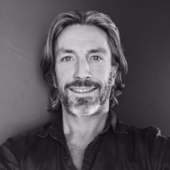
Anxiety
Dr Paul Garden
Psychologist, Doctorate in Psychology, DPsych, MSc with Distinction, BSc First Class Honours.
Experiences of Anxiety, fear and worry can range from being distracting to completely overwhelming, leaving you feeling paralysed and unable to engage with life. I have spent most of my career specialising in treating debilitating anxiety.
11 Years Experience
Online in Stratford, ENG

Anxiety
Dr. Claire Vines, Psy.D., Psychologist / Licensed /Psychotherapy / Psychoanalytic/
Marriage and Family Therapist, Marriage, Couples, LMFT. Psy.D. Trauma-Focused CBT
Balancing self-awareness on perspective of internal conflicts, becoming aware of though/feeling will reduce stress & panic. While we cannot remove painful events, we can manage the reflection of injurious memories. Validating the authentic-self, the true self, is the road to good emotional health.
21 Years Experience
Online in Stratford, ENG

Anxiety
Valerie Fearon
Licensed Professional Counsellor, CBT, Mindfulness, Counselling, Inner Child Truma
Helping clients to deal with Anxiety and fears, by talking to them asking them to talk about the problems that they are working about. Using calming breathing exercises, and work to identify meaning and purpose in their life. And shift their focus to positive emotions in their daily life.
11 Years Experience
Online in Stratford, ENG
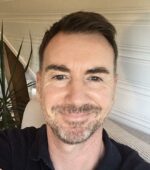
Anxiety
Daniel Dennehy Counselling
Counsellor/Therapist, BA, Dip Grad, AdvDip, MBACP
Counselling provides a space for you to explore your experiences and feelings in a respectful and confidential space. The focus of the conversation is to understand your experience and provide support to explore the ways in which you can introduce change into your life.
8 Years Experience
Online in Stratford, ENG

Anxiety
Peter Dutton
Registered Psychotherapist, Psychotherapist, Life Coach, Sports Performance Psychologist. Registered BACP Member
I help you to understand what anxiety and fear is, how you can allow it to control your life, and how to manage this
14 Years Experience
Online in Stratford, ENG

Anxiety
Lisa Sanfilippo
Therapist, MA, MSc, UKCP, MBACP
Anxiety and fear can relate to external events- and they are also wired into our nervous systems. Being 'activated' can be a very helpful response- when it allows us to protect ourselves. But this can also be our habitual or only response. This can be exhausting. I take an approach that looks not only at the thoughts and feelings but helps you to create different bodily/ nervous system responses to fear/ stress or concern. We can work online or in person, informed by somatic experiencing and Polyvagal Theory. If helpful, we can also explore the links between anxiety and sleep difficulties.
14 Years Experience
Online in Stratford, ENG
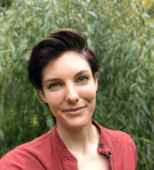
Anxiety
Gemma Autumn
Counsellor/Therapist, Integrative Adult and Adolescent Counsellor Cert, PgDip, MBACP Accredited
I work with anxiety using practical tools and explore the roots of any fears with psychoanalytic therapy.
10 Years Experience
Online in Stratford, ENG

Anxiety
Donna Collins
Registered Psychotherapist, BSc (hons), PGDip, SupervisionDip
I work in a unique way to help people experiencing anxiety and I have helped many people learn the tools and deep exploration to reduce and overcome symptoms.
11 Years Experience
Online in Stratford, ENG

Anxiety
Kat Pachana-Pereira
Registered Psychotherapist, Integrative Therapist (CBT), Couples Therapist, EMDR Therapist
We will focus on beliefs and behaviors that are sabotaging your happiness
9 Years Experience
Online in Stratford, ENG
Anxiety
Empowered Wellbeing, Decolonizing Intersectional and Integrative Complex Trauma & Dissociation Recovery Support
Life Coach, view my credentials online at: www.recoveringfromwithin.com/credentialslongform
From an TIST/EFIT/IPNB/IFS Parts Perspective, clients get to know parts with anxieties and fears and learn how to listen and be with the anxiety, even finding hidden wisdom in these parts. We also offer the Polyvagal Theory based Safe and Sound Protocol (SSP) for clients with more intensive anxiety and fears, particularly social and intimacy fears. Sometimes a functional approach may support clients experiencing anxiety due to physiological stress or epigenetic adaptive stress (e.g. if a basic metabolism or hormonal cycle is not able to complete with ease or there is an injury or chronic health condition that is still being tended to in the body, the brain will likely receive signals of distress that could be read as baseline anxiety, but may be a bodily signal that some part of a basic physiological cycle is not able to function smoothly and may benefit from ascertaining where the challenge is and working with supplemental or integrative support/education/care that is within scope or collaborative scope); please feel free to ask if you have any questions about this.
15 Years Experience
Online in Stratford, ENG (Online Only)

Anxiety
Funmi Oni
Counsellor/Therapist, MBACP, MSc, Dip in PPC
Anxiety is a strong feeling of worry or fear that a person experiences when faced with an impending danger. Using person-centered counseling helps the client to discover a coping mechanism that works for them.
17 Years Experience
Online in Stratford, ENG
Anxiety
Sara Aicart-Pendlebury
Art Therapist, Human Givens Practitioner (HG.Dip.P), Member of Human Givens Institute, IFS therapist Levels 1&2, Narm Practitioner
Anxiety can be crippling and obvious. Or it can subtly sabotage our plans. Contact me for a free consultation on recognizing your feelings of anxiety, and applying anxiety management techniques. You are not an anxious person: you are person more susceptible to anxiety – but you can learn to hand it. We all need to experience some degree of anxiety at times – it would be unnatural not to feel any of its symptoms, such as racing pulse, dry mouth, sweatiness and shallow breathing, just before a big speech or exam, for instance – as it helps get us motivated to act. But excessive anxiety causes problems. Excessive anxiety may develop gradually, starting, perhaps, with loneliness after the loss of a loved one; being too shy to make new friends when moving somewhere new; experiencing unwelcome life changes because of chronic illness and pain; or feeling loaded down with too much responsibility – all cases of unmet emotional needs.
When people worry excessively, it is in essence because important emotional needs, such as for safety, connection or status, are not being met. That’s why the human givens approach, which focuses on helping people in distress find healthy ways to meet their emotional needs, is so effective.
For some people, anxiety can develop suddenly, after they are caught up in some tragic disaster, such as a fire or a crash, or are the victims of violence, and their lives become ruled by fear. (This is known as post-traumatic stress.) Anxiety may also take the form of obsessions, compulsions, phobias or a nagging feeling of foreboding – all of which are attempts to ward off a sense of threat.
Yet, as we know, some people face such circumstances without becoming overly anxious, while others end up almost crippled by anxiety. How we explain the negative events that happen to us has a considerable bearing on whether we are likely to suffer from excessive anxiety. Three particular types of thinking are especially connected with its development and its close partner, depression: how personally people take events (they think everything is their fault or that they didn’t get the job because they weren’t good enough, rather than because the competition was particularly stiff); how pervasive they think the effects will be (if they lose their job, they think everything in their world is going wrong, even though their relationship is still strong and they have their health, good friends, etc); and how permanent(they will never get another job, partner, dream house like that one, etc).
People who suffer badly from anxiety also tend to have a lot of negative thoughts running through their minds that they don’t even notice (“I’ll never cope”; “it’s going to be awful”; “no one likes me”) and commonly catastrophise (“I’m going to be late. My boss will sack me!”) Changing negative self-talk and challenging catastrophic thinking help lower stress levels.
Another major cause of troublesome anxiety is negative over-imagination. Anxious people tend to spend a lot of time worrying “What if?”, coming up with a whole variety of dreadful outcomes for themselves or their loved ones. This keeps them in a constant state of high emotional arousal and can take the extreme forms of phobias or obsessive-compulsive disorders. Learning to use the imagination positively – by calmly rehearsing mentally tried and tested techniques (such as deep breathing and distracting thoughts) for dealing with feared or worrisome situations – is very effective. Calming ourselves down, when anxious, is extremely important because high emotional arousal makes us stupid. We literally can’t think straight and that makes the situation worse.
Human givens practitioners can show people how to relax, so that they can bring their own arousal and stress levels down, and how to use their imaginations positively, to rehearse successful outcomes instead of bad ones. They can also help people overcome phobias, panic attacks and traumatic memories quickly and painlessly. And, very importantly, they will encourage people to find ways to reduce their stress and also focus outwards on fulfilling activities (maybe involving the wellbeing of others as well as themselves) – excellent ways of getting their own needs met.
17 Years Experience
Online in Stratford, ENG

Anxiety
Samantha Coleman
Therapist, MBACP Prof Dip
Anxiety and fear can affect every part of life, leaving you feeling trapped in overthinking, worry, avoidance, panic, self-doubt, or constant anticipation that something bad is about to happen. I work with clients to understand not just the symptoms of anxiety, but the deeper patterns, experiences, relationships, and pressures that may be driving it underneath. Together, we can explore what your anxiety is trying to protect you from, why certain fears feel so powerful, and how to develop a greater sense of safety, confidence, and calm. My approach is less about managing symptoms alone and more about understanding your inner world and what may need to change beneath the surface.
13 Years Experience
Online in Stratford, ENG

Anxiety
Marianna Trezza -The Growing mindset
Counsellor/Therapist, MA (Hons), Adv Dip. Counsel. & Psychoth.,Dip. Hypnoth., X-Cultural Adaptation Coun. Reg. BACP 572613
Many women living abroad carry a subtle but constant state of alertness that is often mistaken for “just stress” or anxiety. My work explores the deeper emotional and nervous system patterns underneath chronic overthinking, emotional exhaustion, hyper-vigilance and the pressure to constantly adapt, perform or hold everything together.
23 Years Experience
Online in Stratford, ENG

Anxiety
Jade at We Tackle Trauma
Counsellor/Therapist, MAASW, MSW, QTS, BSc (Hons)
I combine lived experience of overcoming anxiety, with training in developmental, relational, and embodied trauma. Work with me if you believe that anxiety is not just in your head, and if you are looking for a warm approach that considers your experiences as a whole person, how the body can internalise anxiety; and how to address this. Consults are free and instantly bookable on the We Tackle Trauma website, I look forward to meeting you- Jade Evelyn Gayle
20 Years Experience
Online in Stratford, ENG

Anxiety
Nicola Woods
Registered Psychotherapist, MA, UKCP, EMDR
Experiencing anxiety can feel crippling for many of us. I work with clients in initially building internal and external resources to help manage anxiety. Being resourced in this way enables clients to explore further, to develop greater awareness as to what is underneath the anxiety, which can help to bring a sense of greater freedom.
9 Years Experience
Online in Stratford, ENG (Online Only)
Anxiety therapists in Stratford, England, United Kingdom Statistics
Anxiety therapists in Stratford, England, United Kingdom average 14 years of experience and charge around ¤117 per session. 100% offer online sessions. The most commonly treated issues are Anxiety or Fears (100%), Depression (80%), and Self Esteem (75%).
Average years in practice
14 Years Experience
Average cost per session
¤117
Gender ID
| 69% |
Female |
|
| 29% |
Male |
|
| 1% |
Non-Binary |
|
| 1% |
Gender Fluid |
|
Session Type
| 62% |
In Person and Online |
|
| 38% |
Online Only |
|
Top Specialties
| 100% | Anxiety or Fears |
| 80% | Depression |
| 75% | Self Esteem |
| 70% | Stress |
| 63% | Trauma and PTSD |
| 58% | Social Anxiety |
| 54% | Loss or Grief |