ADHD Therapy and Treatment

What Is ADHD?
Attention-deficit hyperactivity disorder (ADHD) is a chronic neurodevelopmental condition. In 2024, an estimated 7 million U.S. children ages 3 to 17 (11.7%) had a current ADHD diagnosis (CDC, 2026c). For many, this condition begins in childhood and persists well into adulthood. However, for others, it appears to naturally “fade out” or improve once the individual reaches adulthood. There is no specific test used to diagnose ADHD, leading some experts to believe it is overdiagnosed, while others think it is underdiagnosed.
How Common is ADHD? ADHD is one of the most commonly diagnosed childhood disorders.
Are Boys or Girls Most Frequently Diagnosed with ADHD? Boys are almost twice as likely to be diagnosed with ADHD as girls: about 13% of boys and 7% of girls (CDC, 2026c). However, this discrepancy isn’t necessarily because girls are less susceptible; rather, ADHD symptoms present differently in girls and can be more easily overlooked.
What Are the Symptoms of ADHD?
ADHD symptoms vary from child to child; however, there are some common symptoms that children with ADHD tend to experience. For instance, children with ADHD typically have difficulty paying attention to details, both at home and at school. They also tend to be extremely active or hyperactive. Furthermore, children with ADHD usually show more impulsive behaviors than children who do not have the condition. Lastly, some children may exhibit one or two of these symptoms, while others may display all three.
Other symptoms associated with ADHD can include poor self-esteem, a lack of confidence, low grades or poor academic performance, as well as short-lived and/or volatile or dysfunctional relationships.
It is normal for children to exhibit one, two, or even all three of these behaviors from time to time. However, if these behaviors persist beyond the typical timeframe, or if your child continues to exhibit these behaviors long after their peers have stopped, it may be time to have your child evaluated by a trained health professional.
To be diagnosed with ADHD, a person must have symptoms for at least six months, to a greater degree than others the same age, in two or more settings (such as home and school), with several symptoms present before age 12. Children up to age 16 need six or more symptoms of inattention or of hyperactivity-impulsivity; teens 17 and older and adults need five or more (American Psychiatric Association [APA], 2022). The current manual, the DSM-5-TR, describes three presentations rather than subtypes (CDC, 2026b):
- Predominantly hyperactive-impulsive: enough symptoms of hyperactivity-impulsivity, but not of inattention
- Predominantly inattentive: enough symptoms of inattention, but not of hyperactivity-impulsivity
- Combined: enough symptoms of both
Symptoms of hyperactivity
- Squirming in one’s seat or fidgeting with one’s hands or feet
- An inability to remain seated when it’s expected (during meals, storytime, etc.)
- Running and/or climbing when it’s inappropriate
- Problems with playing quietly and/or completing calmer activities
- Being always on-the-go
- Constantly touching and/or playing with anything within sight
- Talking non-stop, even when asked to be quiet
Symptoms of impulsiveness
- Is extremely impatient
- Blurting out answers before the question has been completely asked
- Displaying “unchecked” emotions or performing irrational or impulsive acts (without regard for the consequence)
- Has a hard time waiting for things they want or waiting for their turn
- Frequently interrupts conversations or activities
Symptoms of inattention
- Does not pay attention to details and makes careless mistakes on schoolwork
- Has a hard time paying attention for long periods of time (i.e. during tasks or play)
- Gets bored with tasks quickly and bounces from activity to activity
- Does not appear to be listening when spoken to directly
- Frequently daydreams
- Becomes easily confused
- Is slow at completing tasks
- Has problems completing tasks on time or by the deadline
- Does not follow instructions
- Has poor organization skills
- Has a hard time grasping new concepts
- Avoids or dislikes tasks that require sustained mental concentration (puzzles, reading…)
- Tends to misplace things (toys, assignments, backpacks, keys, pencils, books, coats…)
- Is easily distracted
- Has a hard time processing information quickly and accurately
What Causes ADHD?

The exact cause of ADHD is unknown and may depend on the child, which is why experts disagree on the possible causes of it. Research points to a combination of genetics and other risk factors, including exposure to lead or other environmental risks during pregnancy or early childhood, alcohol and tobacco use during pregnancy, and head injuries (CDC, 2026b).
Neuroimaging studies also suggest that the brain develops along a different path in children with ADHD than in their peers (Silk et al., 2016). Whatever the cause, ADHD symptoms often appear in early childhood, and several must be present before age 12 for a diagnosis (APA, 2022).
How Is ADHD Diagnosed?
All children get distracted, act impulsively, and struggle to sit still from time-to-time. Determining what is considered normal can be challenging because a child’s maturity, temperament, and energy vary based on a child’s personality and level of self-awareness. A parent may be the first to notice a child is developing differently from other children their age. Or, it may be the child’s teacher(s) that first notice that your child struggles to follow rules, or frequently “spaces out” in the classroom.
As mentioned above, there is currently no definitive test that can diagnose a child with ADHD. Therefore, a licensed health professional (child psychologist, child therapist, pediatrician, child psychiatrist, or child clinical social worker) must fully evaluate your child’s behavior before making an ADHD diagnosis. For children, this includes asking parents, teachers and other caregivers how the child behaves at home, at school and with friends. Your local public school system can also evaluate children 3 and older for free (CDC, 2026d).
In addition, before an official ADHD diagnosis can be made, this health professional will need to rule out any other medical conditions that could be contributing to your child’s ADHD-like symptoms. Other conditions, such as depression, anxiety disorders, sleep deprivation, learning disabilities, tic disorders, and other behavioral problems can be confused with ADHD or appear alongside it. In fact, most children with ADHD have at least one other developmental or behavioral problem.
What Type of Therapy Is Best for ADHD?
ADHD is a chronic condition and treatment will not cure ADHD. For many people, symptoms continue into the teen years and adulthood (National Institute of Mental Health [NIMH], 2026). The good news is that behavior therapy helps children build skills to manage their behavior, and many grow up to be happy, successful adults.
An ADHD therapy treatment plan will typically involve a multifaceted approach, including prescription medication, talk therapy, cognitive therapy, and/or behavioral interventions as well as adjustments in daily habits. This strategy is designed to equip both child and family members with new skills to effectively handle ADHD symptoms. It’s also important to understand that your child will require extra guidance, structure, and understanding from both you and their teacher(s). Often, by the time your child is diagnosed, blame, frustration, and even anger may have accumulated within the family or within the classroom environment. Therefore, you may need to participate in parenting therapy, ADHD coaching or possibly anger management therapy in order to develop new skills, attitudes, and ways of relating to your child.
Keep in mind that if ADHD is not properly treated, it can negatively affect your child’s academic performance and friendships. In addition, parents of children with ADHD are often tired and frustrated. Why? Because this condition can cause each family member to experience a high level of stress at times. Get the support you need to ensure you can help your child when they need it. Many therapists offer individual therapy or support groups for parents managing complex behavioral disorders.
Behavior Therapy for Children
For children under 6, the American Academy of Pediatrics recommends parent training in behavior management as the first step, before medication is tried. For children 6 and older, it recommends medication combined with behavior therapy, with parent training through age 12 and other behavior therapies for teens. Classroom behavior support, organizational skills training and peer programs at school can also help (CDC, 2026a).
In parent training, a therapist teaches parents to use praise, clear and brief directions, consistent routines and rewards, then gives them activities to practice with their child at home between sessions. Programs typically run 8 to 16 sessions (CDC, n.d.).
Cognitive Behavioral Therapy (CBT) for Teens and Adults
Cognitive behavioral therapy is one of the standard talk therapies for ADHD (NIMH, 2026). For teens and adults, it focuses on practical skills such as planning, organizing, managing time and handling procrastination, along with the frustration and low self-esteem that years of untreated ADHD can bring.
ADHD Coaching
ADHD coaching is not therapy, but a coach can help with day-to-day structure, goals and accountability. Coaching is not regulated, so it works best alongside care from a licensed professional.
Medication
Stimulant medications work quickly and help most children with ADHD, while nonstimulants work more slowly but can last up to 24 hours. A doctor prescribes and monitors medication, and therapy works alongside it rather than replacing it (CDC, 2026a). Ask your doctor about the benefits and side effects of each option.
Parent Training for Children With ADHD

As a parent, there are many ways to help your ADHD child be better organized, follow instructions and improve their social skills. In fact, the best way to combat the effects of your child’s ADHD is to be vigilant and proactive. For preschool children (ages 4 to 5) with ADHD, behavior therapy, particularly parent training, is recommended as the first line of treatment before medication is tried (CDC, 2026b).
Parenting Tools for Children With ADHD
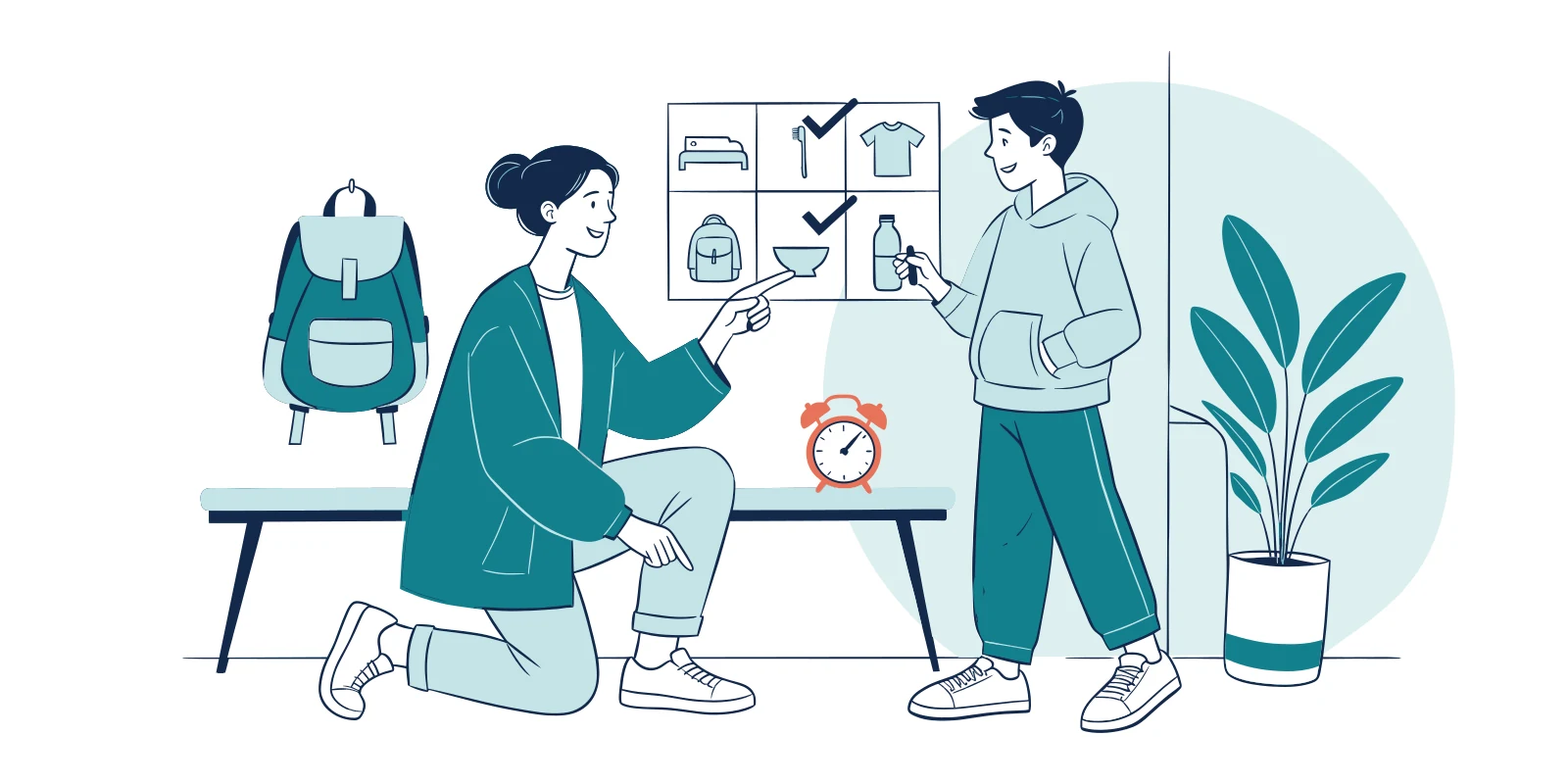
- Time Management: Post a schedule of tasks, such as homework, sports, TV, family time, etc., at a central location in the home and try to follow the same routine daily
- Organized Environment: Ensure that the house is always tidy and neat. Designate specific places for everyday items such as clothing, backpacks, toys, and food
- Teach Organization: Help your child organize their school materials and supplies, and emphasize the importance of writing down instructions for homework assignments
- Simplify Instructions: Multi-step instructions can be difficult for children with ADHD to process. Be clear and consistent, and use words that your child can understand
- Practice Social Skills: As a parent, it is important to model self-control, compassion, as well as good listening and communication skills. Children with ADHD often struggle with impulse control and may miss social cues, which can negatively impact their relationships
- Reward Positive Behavior: Children with ADHD often receive a great deal of criticism but not as much praise. Praise will capture your child’s attention, so make sure to do it when warranted
Can Adults Have ADHD?
Yes! But, unfortunately, many adults with this condition aren’t even aware they have it. Why not? Well, because adult ADHD symptoms tend to be more varied, and not as clear cut, like those in children. About 15.5 million U.S. adults reported a current ADHD diagnosis in 2023, and more than half of them were diagnosed as adults (Staley et al., 2024).
Signs of ADHD in Adults
It’s important to highlight that although most studies and articles focus on child ADHD, adults can also be diagnosed with late-onset ADHD or childhood ADHD may persist into adulthood. Adult ADHD symptoms can lead to a host of problems, such as dysfunctional or unhealthy relationships, poor attendance or productivity at work, low grades at school, and/or low self-esteem or self-confidence.
Other examples of adult ADHD symptoms include:
- Difficulty at school (i.e. low grades, making and keeping friends, etc.)
- Problems at work (i.e. productivity problems, quality issues, low attendance, etc.)
- Failed relationships (i.e. cheating/adultery, impulsiveness, poor communication, lack of detail, hyperactivity, etc.)
- Problems with organization (messy work, forgetting where one places things/problems finding things, etc.)
- Inability to maintain a job or keeping appointments
- Difficulty with daily tasks like getting out of bed, leaving for work, and/or arriving at appointments on time
- Chronic procrastination
- Restlessness and an inability to multitask
- A desire to fix things “quickly,” rather than taking one’s time and doing it right
- Frequent speeding tickets or a history of traffic violations
- Frequent mood swings or anger
- Trouble coping with stress
For some adults, ADHD diagnosis brings a sense of relief. More specifically, an ADHD diagnosis helps them better understand why they have been experiencing so many issues. It also offers them hope through therapy and medication.
Adult ADHD treatment is similar to treatment for children, including ADHD medications like stimulants, counseling (psychotherapy), and treatment for any mental health conditions. A combination of therapy and medication is often the most effective treatment. And, while not the cause, a number of mental health conditions can occur with ADHD.
Common co-occurring conditions include the following:
Mood Disorders: Adults with ADHD may also struggle with mood disorders like clinical depression, bipolar disorder, etc. ADHD does not directly cause mood disorders, but in some people it may worsen or trigger them.
Anxiety: It is common for adults with ADHD to experience anxiety. ADHD can lead to excessive worrying and “nervousness.” Fretting over one’s ADHD symptoms can trigger or increase anxiety in some people. Therefore, anxiety must be managed, in conjunction, with ADHD symptoms for treatment to be effective.
Personality Disorders: Adults with ADHD have higher rates of personality disorders, most often in the group that includes borderline, narcissistic and histrionic personality disorders. Research on this overlap is still limited (Katzman et al., 2017)
If you or your child has ADHD, treatment can help. Remember that with medication, psychotherapy, and/or behavioral training, individuals (children and adults) can learn how to better manage the symptoms, so they can live happy and successful lives.
ADHD FAQs
What should I do if I think my child has ADHD?
If you suspect your child may have ADHD, the best thing you can do is document their symptoms: when they arise, how often they arise and what they look like in detail. Learn about the condition, possible causes, typical ADHD symptoms and treatment options, and then have your child evaluated by a qualified health professional. Your local public school system can also evaluate children 3 and older for free (CDC, 2026d).
Does therapy help ADHD?
Yes. Behavior therapy and parent training help children manage their behavior, and for young children parent training has worked as well as medication (CDC, 2026a). For teens and adults, CBT can build planning and organizing skills. Many people do best with therapy and medication together.
How long does ADHD therapy take?
It depends on the person and the type of therapy. Parent training programs for young children often run 8 to 16 sessions (CDC, n.d.). Teens and adults working on skills such as organization and time management may meet weekly for a few months, then check in as needed.
Is ADHD real?
Yes. ADHD is a recognized neurodevelopmental condition in the DSM-5-TR, the manual clinicians use to diagnose mental health conditions (APA, 2022). Brain imaging research also shows differences in how the brain develops in children with ADHD (Silk et al., 2016).
Find an ADHD Therapist Near You
The prognosis of ADHD with treatment is good. Finding the right therapist for you or your child may take a bit of trial, but TherapyTribe Directory makes it easy to search and review a variety of qualified ADHD therapists offering both in-person and online therapy sessions. You may want to reach out to several therapists in order to learn more about their ADHD treatment modalities and evaluate if they are the right fit for you or your child.
ADHD therapists in Top Cities
- Toronto
- Chicago
- Los Angeles
- Calgary
- Vancouver
- New York City
- Houston
- Philadelphia
- Hamilton
- Dallas
- London
- Seattle
- San Francisco
- Manhattan
- Ottawa
- San Diego
- Atlanta
- Mississauga
- Victoria
- Denver
- San Antonio
- Washington
- Oakville
- Boston
- Raleigh
- Miami
- Markham
- Pittsburgh
- North York
- Burlington
- Ajax
- Orlando
- Sydney
- Vaughan
- Columbus
- Austin
- Phoenix
- Pasadena
- Tampa
- Edmonton
- Jacksonville
- Alexandria
- Guelph
- Oshawa
- Boca Raton
- Durham
- Nashville
- Windsor
- Portland
- Melbourne
This article is for general information only and is not a substitute for advice from a licensed mental health or medical professional.
References
American Psychiatric Association. (2022). Diagnostic and statistical manual of mental disorders (5th ed., text rev.). https://doi.org/10.1176/appi.books.9780890425787
Centers for Disease Control and Prevention. (n.d.). Parent training in behavior management. Retrieved November 10, 2026, from https://www.cdc.gov/adhd/treatment/behavior-therapy.html
Centers for Disease Control and Prevention. (2026a, October 21). Treatment of ADHD. https://www.cdc.gov/adhd/treatment/index.html
Centers for Disease Control and Prevention. (2026b, October 21). ADHD in children. https://www.cdc.gov/adhd/about/index.html
Centers for Disease Control and Prevention. (2026c). Data on ADHD in children. Retrieved November 10, 2026, from https://www.cdc.gov/adhd/data/index.html
Centers for Disease Control and Prevention. (2026d, October 21). Diagnosing ADHD. https://www.cdc.gov/adhd/diagnosis/index.html
Katzman, M. A., Bilkey, T. S., Chokka, P. R., Fallu, A., & Klassen, L. J. (2017). Adult ADHD and comorbid disorders: Clinical implications of a dimensional approach. BMC Psychiatry, 17, Article 302. https://doi.org/10.1186/s12888-017-1463-3
National Institute of Mental Health. (2026). Attention-deficit/hyperactivity disorder (ADHD). https://www.nimh.nih.gov/health/topics/attention-deficit-hyperactivity-disorder-adhd
Silk, T. J., Genc, S., Anderson, V., Efron, D., Hazell, P., Nicholson, J. M., Kean, M., Malpas, C. B., & Sciberras, E. (2016). Developmental brain trajectories in children with ADHD and controls: A longitudinal neuroimaging study. BMC Psychiatry, 16, Article 59. https://doi.org/10.1186/s12888-016-0770-4
Staley, B. S., Robinson, L. R., Claussen, A. H., Katz, S. M., Danielson, M. L., Summers, A. D., Farr, S. L., Blumberg, S. J., & Tinker, S. C. (2024). Attention-deficit/hyperactivity disorder diagnosis, treatment, and telehealth use in adults: National Center for Health Statistics Rapid Surveys System, United States, October–November 2023. Morbidity and Mortality Weekly Report, 73(40), 890–895. https://doi.org/10.15585/mmwr.mm7340a1